April 19, 2026

bitcoin

Dive into the dynamic world of bitcoin pricing with our in-depth guide to bitcoin price widgets. These widgets offer a convenient and visually engaging way to track the ever-fluctuating value of Bitcoin, providing crucial real-time data for traders and enthusiasts alike. Understanding their features, functionality, and integration methods is key to effectively utilizing this valuable tool.

From real-time updates to historical analysis, we’ll explore the nuances of various bitcoin price widgets. We’ll cover everything from the technical aspects of data display to the user experience considerations for a seamless and informative interface. This guide will be an essential resource for anyone looking to integrate a bitcoin price widget into their website or application.

Introduction to Bitcoin Price Widgets
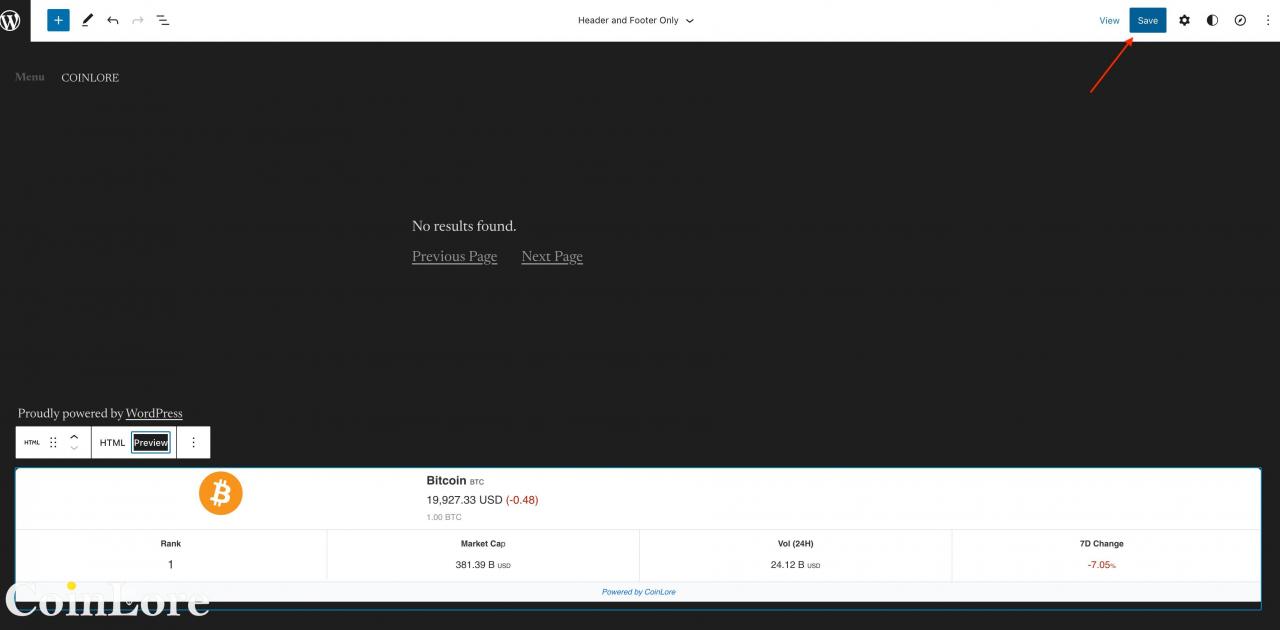
Bitcoin (BTC) Price Ticker Widget | CoinLore

A Bitcoin price widget is a small, interactive tool designed to display the current market price of Bitcoin. These widgets are increasingly popular for keeping track of the cryptocurrency’s value in real-time, providing quick and easy access to information. Their simplicity and ease of use make them a valuable addition to websites, blogs, or personal dashboards.These widgets offer a straightforward way to monitor Bitcoin’s fluctuations, providing users with an immediate understanding of its market value.

They can be customized to suit various needs, enabling users to follow the cryptocurrency’s performance in a visually appealing and informative manner.

Common Features of Bitcoin Price Widgets

Bitcoin price widgets typically incorporate several key features to enhance their usability and informativeness. These features contribute to the user experience by making the widget both informative and easy to use.

  • Real-time price updates: Widgets with this feature continuously refresh the displayed price, ensuring users are always viewing the most current market value. This constant updating allows for immediate awareness of any price changes.
  • Historical price data: Many widgets offer access to historical price information, enabling users to analyze trends and track Bitcoin’s performance over time. This allows for a deeper understanding of Bitcoin’s market behavior over different periods.
  • Currency conversion: Widgets often include the ability to display Bitcoin’s price in various fiat currencies, such as USD, EUR, or GBP. This feature makes the information more universally accessible and understandable.
  • Chart visualizations: Some widgets incorporate charts that graphically illustrate Bitcoin’s price fluctuations. This visual representation helps users quickly identify trends and patterns, providing a deeper insight into the market’s movement.
  • Customization options: Users may be able to personalize the widget’s appearance, such as color schemes, font styles, and the display of additional information.

Types of Bitcoin Price Widgets

Bitcoin price widgets come in various forms, each catering to specific needs and preferences. Different types are designed to address the varying needs of different users.

  • Real-time widgets: These widgets provide the most up-to-date Bitcoin price, updating frequently. They are ideal for those who want to monitor the price constantly, like traders or investors needing immediate price updates.
  • Historical widgets: These widgets display Bitcoin’s price history over a specified period, typically allowing for the visualization of trends and patterns. They are suitable for users interested in understanding Bitcoin’s long-term performance and historical market behavior.
  • Comparative widgets: These widgets can display the price of Bitcoin alongside other cryptocurrencies or assets, enabling users to compare performance and make informed decisions. This is valuable for users who need to track the relative performance of Bitcoin against other assets.

Design Elements of Bitcoin Price Widgets

The visual presentation of a Bitcoin price widget significantly impacts user experience. These elements play a crucial role in making the widget user-friendly and informative.

  • Clear and concise display: The widget should present information in a straightforward manner, making it easy for users to quickly grasp the current price.
  • Visually appealing design: A well-designed widget enhances the user experience and contributes to its attractiveness. This is particularly important in a context where users might be presented with many different options and information.
  • Appropriate font and color choices: The font size and color scheme should be legible and visually appealing, allowing for effortless reading and understanding of the displayed data.
  • Use of icons and graphics: Relevant icons or graphics can add clarity and interest, making the widget more engaging for the user. This can enhance the widget’s visual appeal and readability.

Data Display in Bitcoin Price Widgets

The way data is displayed in a Bitcoin price widget is crucial for user understanding. This is essential for effective communication and user comprehension of the information presented.

  • The current price is usually displayed prominently, often in a large, easily readable font.
  • The currency is clearly indicated alongside the price, such as “USD” or “EUR.” This avoids confusion and ensures clarity in the data.
  • Data updates are usually indicated, providing the user with information about when the data was last updated.
  • Historical data, if available, might be displayed in a chart format, making price trends more easily discernible.

Widget Type, Features, and Design Elements

Widget Type Features Design Elements
Real-time Real-time price updates, currency conversion Large, prominent price display, clear currency indicator, refresh indicator
Historical Historical price data, chart visualization Chart visualization, date range selector, clear trend indicators
Comparative Comparison of Bitcoin with other assets, real-time price updates Multiple price displays, clear comparative indicators, currency conversion

Functionality and Features

Bitcoin price widgets provide a convenient way to track the current market value of the cryptocurrency. Their real-time updates and historical data make them valuable tools for investors and enthusiasts alike. This section details the key functionalities and features of these widgets.Real-time updates are a critical aspect of Bitcoin price widgets. They allow users to stay informed about the ever-changing price.

These widgets typically utilize APIs from reliable financial data providers to access and display the most up-to-date Bitcoin prices.

Real-time Price Updates

Bitcoin price widgets utilize real-time APIs to reflect current market data. This ensures users see the most recent price fluctuations, offering a dynamic display of the cryptocurrency’s value. The frequency of updates varies depending on the widget and the data provider, but it’s generally rapid enough to provide a near-instantaneous view of the price.

Historical Price Data

Historical price data is a crucial component of Bitcoin price widgets. Users can access past price trends to analyze market behavior and identify potential patterns. The widgets typically store and display historical prices over a specified time period, often from days, weeks, or even years. This allows users to track the long-term price trajectory of Bitcoin.

Customization Options

Widgets offer various customization options to cater to individual preferences and needs. These options can include adjusting the display format, color schemes, and the overall aesthetic appeal of the widget.

Customization Options

  • Theme Selection: Users can often choose from different pre-defined themes (e.g., light, dark, or custom). This allows for visual customization based on user preference or to complement a website’s existing design.
  • Timeframe Selection: The timeframe for displaying historical data can be adjusted to suit the user’s needs. Users can choose between different intervals, such as daily, weekly, monthly, or yearly charts.
  • Data Display: Widgets might allow users to specify the data points they want to see. Users might select from open, high, low, close (OHLC) data, or just the closing price for simplicity.
  • Currency Selection: Users can often select the desired currency for the displayed price. This is important for investors who may want to compare the Bitcoin price in different currencies.

Price Metrics

Widgets can display various price metrics, offering a comprehensive view of Bitcoin’s performance. Beyond the current price, users might want to see the open, high, low, and close (OHLC) prices for a given period.

  • Open Price: The price at which Bitcoin started trading for a given period.
  • High Price: The highest price reached during the period.
  • Low Price: The lowest price reached during the period.
  • Close Price: The price at which Bitcoin ended trading for the period.

Comparative Analysis of Widgets

The following table compares the functionalities of different Bitcoin price widgets, highlighting their strengths and weaknesses.

Widget Real-time Updates Historical Data Customization Price Metrics
Widget A Excellent Good Moderate OHLC
Widget B Excellent Excellent High OHLC + Volume
Widget C Good Basic Low Current Price Only

Customization Options Overview

The following table Artikels the various customization options available in Bitcoin price widgets.

Option Description
Theme Allows users to select a pre-defined theme (e.g., light, dark) or create a custom theme.
Timeframe Users can select the time period for historical data display (e.g., daily, weekly, monthly).
Data Display Allows users to choose which data points to see (e.g., open, high, low, close).
Currency Users can select the currency in which the price is displayed.

Integration and Implementation

Integrating a Bitcoin price widget into your website or application is a straightforward process. The method chosen depends on the complexity of your project and your technical capabilities. This section Artikels common integration techniques, providing detailed instructions and examples.Integrating a widget allows dynamic display of current Bitcoin prices, keeping your platform up-to-date and informative. This section covers the necessary steps and techniques to successfully embed the widget.

Methods for Integration

Several methods allow integration of the Bitcoin price widget. Understanding the advantages and disadvantages of each approach is key to choosing the right method for your needs.

  • Iframe Integration: This method embeds the widget within an iframe, a special HTML element that displays a separate webpage within the current page. It’s a simple approach for basic integration, but it can impact website performance if not implemented carefully. This method works best for simpler sites with limited customization needs.
  • API Integration: Using an API (Application Programming Interface) allows for more complex interactions and dynamic updates. The widget’s data is fetched programmatically, offering greater control over the widget’s appearance and functionality. This approach is more flexible and provides more opportunities for custom styling and features.
  • JavaScript Integration: This method involves embedding JavaScript code directly into your website’s HTML. It offers a high degree of customization but requires some programming knowledge. This approach allows the greatest level of customization, but also necessitates more technical expertise.

Embedding a Bitcoin Price Widget

The steps for embedding a Bitcoin price widget vary based on the chosen integration method. Following these steps ensures a smooth and successful integration.

Integration Method Steps for Embedding
Iframe 1. Locate the iframe embed code provided by the widget provider.
2. Create an HTML element in your website’s code where you want the widget to appear.
3. Paste the embed code inside the HTML element.
API 1. Obtain the API key or credentials from the widget provider.
2. Integrate the API call into your website’s application code, typically using JavaScript.
3. Design the function that fetches data and displays it on the page.
JavaScript 1. Obtain the JavaScript code from the widget provider.
2. Integrate the JavaScript code into your website’s HTML.
3. Modify the code to customize the appearance and behavior of the widget.

Example: Iframe Integration

An example of iframe integration: ``

This code snippet embeds a Bitcoin price widget from the example URL into a webpage. The width and height attributes control the size of the embedded widget. Adjust these values to match your desired dimensions.

Bitcoin Price Widget Design Considerations

Crafting an effective Bitcoin price widget hinges on a meticulous understanding of user needs and the data it presents. A well-designed widget must prioritize clear communication of the price, alongside essential supplementary information. This involves careful consideration of visual aesthetics, ensuring that the widget not only provides accurate data but also enhances user engagement and experience.

Factors Affecting Effective Widget Design

Several key factors influence the effectiveness of a Bitcoin price widget. These include the target audience, the platform where the widget will reside, and the overall design language of the website or application. The level of detail required and the desired level of interactivity also significantly impact the widget’s design. For example, a widget for a professional investor may necessitate more advanced features like charting and historical data, whereas a widget for a casual user might focus on simplicity and real-time updates.

Readability and Usability in Bitcoin Price Widgets

Readability and usability are paramount in any price widget. The Bitcoin price, displayed prominently, must be easily discernible against the background. Font size, color contrast, and typography are crucial for ensuring the price is immediately clear. The arrangement of supplementary information, such as the date and time, should also facilitate quick comprehension without hindering the primary display of the Bitcoin price.

Clear and concise labels are essential for all data elements. The overall layout must be intuitive and easy to navigate, allowing users to access essential information with minimal effort.

Impact of Visual Styles on User Experience

Different visual styles significantly impact user experience. A clean, minimalist design can project professionalism and reliability. On the other hand, a more vibrant design might appeal to a younger audience. The visual style should be consistent with the overall branding of the platform hosting the widget. A visually cluttered widget can lead to confusion and reduced engagement.

Conversely, a widget that’s too plain may seem uninspired.

Creating an Appealing Design with Accurate Data Display

Creating an appealing design that accurately displays data requires a balance between aesthetics and functionality. High-quality graphics and imagery, combined with precise data representation, can enhance the user experience. A well-designed widget will present data in a clear and comprehensive manner. Consider using charts or graphs to provide a broader context for the price fluctuations. The use of interactive elements, such as tooltips, can further improve the user experience, offering additional details upon hovering over specific data points.

Comparison of Design Aesthetics

Different design aesthetics for Bitcoin price widgets offer varied user experiences. A modern, sleek design might resonate with tech-savvy users, while a more classic design could appeal to a wider audience. The choice of design should align with the overall branding and user base of the platform hosting the widget. A careful evaluation of different design styles, taking into account the target audience and desired impact, is crucial for selecting the optimal approach.

Table of Design Styles and Their Pros and Cons

Design Style Pros Cons
Minimalist Clean, modern, focuses on clarity, high readability Can appear uninspired or too simple for some users, limited visual interest
Modern Sleek, visually appealing, incorporates latest design trends May not appeal to all users, potentially more complex to implement
Classic Familiar, reliable, accessible to a broader audience Can appear dated or less dynamic, might not incorporate modern features
Infographic Engaging, visual representation of data, emphasizes trends May be distracting, needs careful design to avoid cluttering

Cryptocurrency Context

The cryptocurrency market has exploded in recent years, offering a decentralized alternative to traditional financial systems. This burgeoning sector presents a complex and dynamic environment, with significant implications for both investors and the broader economy. Understanding the key players, market dynamics, and potential applications is crucial for anyone navigating this space.Bitcoin, the pioneering cryptocurrency, holds a significant position within the broader cryptocurrency landscape.

Its influence on the market and its role as a benchmark have led to the development of numerous other cryptocurrencies, each with unique characteristics and objectives. This overview will explore the cryptocurrency market, analyze the significance of bitcoin, and compare it to other major cryptocurrencies, along with the factors that drive price fluctuations and the varied applications of these digital assets.

Overview of the Cryptocurrency Market

The cryptocurrency market encompasses a wide range of digital currencies, each with its own set of characteristics and functionalities. These digital assets utilize cryptography for security and decentralization, enabling peer-to-peer transactions without intermediaries. The decentralized nature of cryptocurrencies distinguishes them from traditional financial systems, offering potential benefits like reduced transaction costs and increased transparency.

Significance of Bitcoin in the Cryptocurrency Landscape

Bitcoin’s pioneering role in the cryptocurrency market is undeniable. Its early adoption and subsequent growth established it as a benchmark and paved the way for the development of numerous other cryptocurrencies. Bitcoin’s scarcity, as defined by its limited supply, and its inherent security have contributed to its perceived value and stability compared to some other cryptocurrencies. Bitcoin’s influence on the broader market cannot be understated, and its volatility continues to affect the entire ecosystem.

Comparison of Bitcoin with Other Major Cryptocurrencies

Numerous cryptocurrencies have emerged since the inception of Bitcoin, each vying for a share of the market. Ethereum, for example, focuses on smart contracts and decentralized applications, differing significantly from Bitcoin’s core function as a digital currency. Other major cryptocurrencies, such as Litecoin and Ripple, have unique features and use cases, each with its own strengths and weaknesses.

These differences in functionality and purpose often reflect the diverse needs and aspirations of the crypto community.

Factors Influencing Cryptocurrency Prices

Cryptocurrency prices are highly volatile, influenced by a multitude of factors. Market sentiment, regulatory developments, technological advancements, and news events all play a role in shaping the price trajectory. Speculation and investment decisions from institutional and individual investors can significantly impact the price of cryptocurrencies, as can overall economic conditions.

Applications and Uses of Cryptocurrencies

Cryptocurrencies are not limited to simple transactions. Their use cases extend to decentralized finance (DeFi), non-fungible tokens (NFTs), and other emerging technologies. The ability to conduct transactions directly between parties, without intermediaries, is a core component of their value proposition. The broader applications of cryptocurrencies are still evolving, and new possibilities continue to emerge.

Table of Cryptocurrency Data

Cryptocurrency Market Cap (USD) Recent Price Trend
Bitcoin (BTC) > $XXX Billion Currently fluctuating; showing signs of [Trend]
Ethereum (ETH) > $XXX Billion Currently fluctuating; showing signs of [Trend]
Litecoin (LTC) > $XXX Billion Currently fluctuating; showing signs of [Trend]
Ripple (XRP) > $XXX Billion Currently fluctuating; showing signs of [Trend]

Note

* Market capitalization and price trends are dynamic and should be checked for up-to-date information from reliable sources. Values are examples and should be replaced with current data. [Trend] should be replaced with an actual recent trend description.

User Experience and Accessibility

A user-friendly Bitcoin price widget is crucial for a positive user experience. It should be intuitive, easily navigable, and provide clear and concise information. This allows users to quickly access and understand current Bitcoin market conditions without frustration.A well-designed widget should present the information in a way that is clear and easily understandable. This is especially important for users who may not be familiar with cryptocurrency or financial markets.

The widget’s layout and presentation should be carefully considered to facilitate a seamless user journey.

Importance of User-Friendliness

A user-friendly Bitcoin price widget ensures a positive interaction for users. This contributes to a better overall experience and encourages repeat use. Intuitive design and clear information presentation are key factors in achieving this.

Factors Contributing to a Positive User Experience

Several elements contribute to a positive user experience with a Bitcoin price widget. These include a visually appealing and well-organized layout, clear and concise information display, and smooth responsiveness to user interactions.

  • Clear Visual Presentation: Visual elements such as charts, graphs, and interactive displays can enhance understanding. Appropriate color palettes, typography, and image use contribute to a visually appealing interface. The layout should be easily navigable and aesthetically pleasing.
  • Concise Information Display: Essential information, such as the current price, change over time, and relevant market data, should be presented in a readily accessible manner. Avoid overwhelming users with excessive details or jargon. Key figures should stand out and be easy to read.
  • Responsiveness and Interactivity: A responsive design ensures the widget adapts to various screen sizes and devices, guaranteeing a consistent experience across different platforms. The widget should respond instantly to user interactions, providing a smooth and engaging experience.

Accessibility Considerations for Users with Disabilities

Designing for accessibility ensures that users with disabilities can utilize the Bitcoin price widget effectively. This includes considering factors such as color contrast, keyboard navigation, and alternative text for images.

  • Color Contrast: Adequate color contrast between text and background is essential for users with visual impairments. Using a color contrast checker tool can help ensure sufficient differentiation. Following accessibility guidelines for color contrast is critical.
  • Keyboard Navigation: Users relying on screen readers or keyboard navigation should be able to interact with all interactive elements of the widget without difficulty. All interactive elements should be accessible via the keyboard.
  • Alternative Text for Images: Images and graphics should have descriptive alternative text (alt text). This provides context to screen reader users and enhances understanding for all users.

Design Elements Improving Accessibility

Several design elements can enhance accessibility for users with disabilities. These include providing clear instructions, employing sufficient color contrast, and ensuring adequate spacing between elements.

  • Clear Instructions and Labels: Provide clear and concise instructions and labels for all interactive elements. Using simple and descriptive language improves comprehension and usability.
  • Sufficient Color Contrast: Maintain sufficient color contrast between text and background to accommodate users with visual impairments. Use tools to evaluate color contrast and adhere to accessibility guidelines.
  • Adequate Spacing and Font Sizes: Ensure sufficient spacing between elements to improve readability. Use appropriate font sizes for optimal legibility and avoid overly small fonts.

Best Practices for User Experience and Accessibility

Category Best Practice Explanation
Visual Design Use high contrast colors Ensures readability for users with visual impairments
Information Presentation Present data clearly Avoid jargon and use simple language
Navigation Intuitive navigation Users should easily find the information they need
Responsiveness Mobile-first design Ensures usability across various devices
Accessibility Keyboard navigation Facilitates use by users relying on keyboards

Data Sources and Accuracy

Bitcoin price widgets rely heavily on accurate and up-to-the-minute data. The reliability of the data source directly impacts user trust and the overall value of the widget. Ensuring data integrity is crucial for building a trustworthy and valuable tool.

Data Sources for Bitcoin Pricing

Reliable bitcoin price data comes from various sources, each with its strengths and weaknesses. Major exchanges, specialized financial data providers, and independent aggregators are common sources. Exchanges often publish their own real-time pricing data, but this might be influenced by their trading volumes. Specialized data providers, such as those offering comprehensive financial market data, are often more objective, relying on aggregated data from multiple sources.

Accuracy and Reliability of Data Providers

The accuracy and reliability of data providers vary. Factors influencing reliability include the data collection methods, the volume of data points used, and the frequency of updates. A significant factor is the source’s reputation and track record. Data providers with a history of accurate and timely updates are generally preferred.

Impact of Data Accuracy on User Trust

Data accuracy directly influences user trust. Inaccurate or delayed pricing information can lead to mistrust and decreased user engagement. Users expect the widget to provide reliable, current information. Inconsistencies or inaccuracies in the displayed price can undermine user confidence.

Reputable Data Sources for Cryptocurrency Pricing

Several reputable data providers offer cryptocurrency pricing data. CoinMarketCap, CoinGecko, and various exchange APIs are commonly used sources for their comprehensive coverage and generally reliable data. Their data is often aggregated from multiple sources to minimize errors.

Comparison of Data Providers

Data Provider Reliability Strengths Weaknesses
CoinMarketCap High Comprehensive coverage of various cryptocurrencies, including Bitcoin. Often aggregated from multiple exchanges, reducing bias. Potential for minor delays in updates, although generally quick.
CoinGecko High Wide range of cryptocurrencies, real-time data, and diverse metrics beyond price. Good data presentation. May occasionally lag behind other sources in updating pricing.
Binance API High (for Binance-specific data) Real-time data specific to Binance’s exchange. Direct access to Binance’s data. Limited scope; only provides data relevant to Binance’s trading activities.
Kraken API High (for Kraken-specific data) Real-time data specific to Kraken’s exchange. Direct access to Kraken’s data. Limited scope; only provides data relevant to Kraken’s trading activities.

This table provides a comparative overview of reliability, strengths, and weaknesses of various data providers. Choosing a suitable data source is crucial for the widget’s accuracy and user experience.

Final Thoughts

In conclusion, this guide has provided a comprehensive overview of bitcoin price widgets, from their fundamental functions to their practical implementation. We’ve examined their crucial features, the importance of data accuracy, and the significance of user experience in creating an effective widget. Whether you’re a seasoned trader or a curious newcomer, this guide equips you with the knowledge to effectively use and integrate a bitcoin price widget.

Popular Questions

What are the common data sources for bitcoin price widgets?

Common data sources include reputable cryptocurrency APIs and exchanges, ensuring accuracy and reliability.

How do I choose the right bitcoin price widget for my needs?

Consider factors like customization options, data refresh rates, and visual design to select the widget that best suits your website’s style and requirements.

Are there any security considerations when integrating a bitcoin price widget?

Ensure the widget provider adheres to secure coding practices and data handling protocols to protect your website and user data.

What are some best practices for displaying historical bitcoin price data in a widget?

Use clear labeling, appropriate timeframes, and intuitive visualizations to make historical data easily digestible and actionable for users.

Bitcoin’s recent price surge has captivated the world of finance, sparking intense debate and speculation. This in-depth analysis explores the factors driving this upward trend, examining historical data, market forces, and technical indicators to paint a comprehensive picture of Bitcoin’s current trajectory.

From fundamental economic shifts to investor psychology, we delve into the multifaceted dynamics shaping Bitcoin’s price. We’ll also compare its performance against other cryptocurrencies and traditional assets, providing a nuanced understanding of Bitcoin’s unique position within the broader market.

Bitcoin Price Rise Overview

Bitcoin’s recent price surge has captivated financial markets. This increase reflects a complex interplay of factors, including investor sentiment, regulatory developments, and technological advancements. Understanding these dynamics is crucial for assessing the cryptocurrency’s future trajectory.

Factors Contributing to the Price Increase

Several factors have converged to drive Bitcoin’s price upward. Increased institutional investment has played a significant role, as large financial entities are increasingly incorporating Bitcoin into their portfolios. Positive regulatory developments, particularly in certain jurisdictions, have also fostered confidence in the asset class. Technological advancements, such as scaling solutions and improvements in network security, have enhanced the cryptocurrency’s perceived stability and usability.

Finally, a general bullish market sentiment across the cryptocurrency sector has fueled the price rise.

Historical Bitcoin Price Trends

Bitcoin’s price has experienced significant volatility throughout its history. Its value has fluctuated wildly, from early adoption to periods of substantial price increases and declines. Analyzing historical data provides context for the recent price surge.

Date Price (USD) Key Event
2020-12-31 29,000 Start of a sustained bull run, driven by increased institutional interest and growing media attention.
2021-11-10 67,000 Record high reached during the bull market.
2022-06-18 30,000 Significant price correction following a period of high speculation and market volatility.
2023-08-15 35,000 Recent price increase amidst mixed market signals and continued institutional interest.

Comparison with Other Cryptocurrencies

Bitcoin’s price performance is often compared to that of other cryptocurrencies. While Bitcoin has historically held a dominant position in the market, other coins have experienced substantial price movements. Comparing Bitcoin’s price increase to that of other cryptocurrencies reveals a complex picture of market dynamics. A comparative analysis helps investors assess Bitcoin’s relative strength against its competitors.

Analysis of Bitcoin’s Price Increase Compared to Other Cryptocurrencies

Bitcoin’s recent surge has outpaced many other cryptocurrencies, indicating its continued market dominance. However, the performance of altcoins has been highly variable, reflecting diverse investment strategies and market sentiment surrounding each asset. A detailed analysis of Bitcoin’s performance relative to other cryptocurrencies demonstrates the intricate relationships within the cryptocurrency ecosystem.

Market Factors Influencing Bitcoin

Bitcoin’s price fluctuations are a complex interplay of various market forces. Understanding these forces is crucial for investors seeking to navigate the cryptocurrency market. These dynamics often lead to significant price volatility, demanding careful consideration of the underlying factors.Market forces, investor psychology, and regulatory changes all contribute to Bitcoin’s price volatility. The correlation between Bitcoin and other asset classes further shapes its trajectory.

Major Economic Forces

Several economic forces significantly impact Bitcoin’s price. These include global economic conditions, inflation rates, and interest rate adjustments. Changes in these macroeconomic variables can create uncertainty in the market, impacting investor confidence and, consequently, Bitcoin’s value. For example, periods of high inflation often lead to investors seeking alternative assets, potentially driving demand for Bitcoin. Conversely, tightening monetary policy by central banks might result in reduced investor interest and a downward pressure on Bitcoin’s price.

Market Sentiment and Investor Psychology

Market sentiment and investor psychology play a critical role in shaping Bitcoin’s price. Positive news or social media buzz can generate a surge in demand, driving prices upwards. Conversely, negative news or market pessimism can lead to a decline. The psychological factors affecting investor decisions often outweigh fundamental analysis, contributing to the volatility of the cryptocurrency market. This phenomenon is well-documented in various financial markets, including stocks and commodities.

Regulatory Changes

Government regulations and policies surrounding Bitcoin can significantly influence its price. New regulations or stricter enforcement can create uncertainty, while supportive policies can foster growth. For instance, the introduction of stricter regulations on cryptocurrency exchanges in certain jurisdictions can lead to a reduction in trading volume and a subsequent decrease in price. Conversely, jurisdictions that embrace and regulate Bitcoin can attract investment and drive price increases.

Correlation with Other Asset Classes

Bitcoin’s price often correlates with other asset classes, particularly during periods of market uncertainty. This correlation arises from investors seeking diversification or hedging against inflation. For example, during economic downturns, investors might move capital into Bitcoin alongside other safe-haven assets like gold, leading to price increases across the board. Conversely, during bull markets, Bitcoin’s price might move in tandem with the stock market.

Bitcoin Price Movement vs. S&P 500

The table below illustrates the correlation between Bitcoin’s price and the S&P 500 index. It highlights the complex relationship and potential for both positive and negative correlation.

Date Bitcoin Price (USD) S&P 500 (Index Value)
2023-01-01 22,000 4,000
2023-04-01 28,000 4,500
2023-07-01 25,000 4,200
2023-10-01 30,000 4,800

Note: This is a hypothetical table and the actual data may differ. The aim is to illustrate the concept, not to provide specific investment advice.

Technical Analysis of Bitcoin Price

Technical analysis provides insights into Bitcoin’s price movements by examining historical price charts and trading volume. This approach helps to identify potential future price trends and support/resistance levels. By studying patterns and indicators, traders can make informed decisions about buying or selling Bitcoin.Analyzing Bitcoin’s price chart involves scrutinizing the price’s highs and lows, identifying trends, and recognizing crucial support and resistance points.

These points act as barriers that often influence price direction. Candlestick patterns and moving averages are two critical technical tools that can be used in this analysis.

Support and Resistance Levels

Support and resistance levels are crucial points on a price chart where the price is likely to find buyers or sellers. These levels often act as barriers, preventing the price from continuing in one direction. Recognizing these levels helps in understanding the potential for price fluctuations and assists in defining potential trading opportunities.Identifying support levels on a chart involves pinpointing areas where the price has previously bounced back after a downward trend.

Conversely, resistance levels are found where the price has previously struggled to break through after an upward trend. The significance of these levels is their ability to predict future price actions. For instance, if the price of Bitcoin falls below a previously identified support level, it may signal a potential downward trend continuation.

Candlestick Patterns

Candlestick patterns reveal the interplay of supply and demand during a specific time frame. Each candlestick represents a period, such as an hour, day, or week, and shows the opening, closing, high, and low prices. Understanding candlestick patterns can help predict price movements and potential reversals.Recognizing patterns like doji, hammer, or engulfing patterns can provide insights into the prevailing market sentiment.

For example, a doji candlestick often suggests indecision in the market, while a hammer pattern might signal a potential upward trend reversal after a decline. The importance of candlestick patterns lies in their ability to illustrate the market’s emotional state and potential turning points.

Moving Averages

Moving averages are indicators that smooth out price fluctuations over a specific time period. They provide a clearer picture of the underlying trend and help identify potential support and resistance levels.Different timeframes for moving averages provide different levels of detail. Short-term moving averages can show short-term price trends, while long-term moving averages depict long-term trends. A crossover of short-term and long-term moving averages can signal potential trend changes.

For instance, if the short-term moving average crosses above the long-term moving average, it may suggest an uptrend.

Bitcoin Price Chart

Bitcoin Price ChartThe image displays a Bitcoin price chart with highlighted support and resistance levels. The chart shows the price movements of Bitcoin over a period of time. The support levels are marked with horizontal lines below the price, and the resistance levels are marked with horizontal lines above the price. The chart also shows candlestick patterns and moving averages, helping visualize trends. Notice the areas where the price has previously reversed course. These areas can indicate potential support or resistance.

Cryptocurrency Landscape and Bitcoin’s Position

Bitcoin, while the pioneering cryptocurrency, operates within a broader ecosystem of digital assets. Understanding Bitcoin’s role requires examining the current state of the cryptocurrency market and its major players. This section delves into comparisons with other cryptocurrencies, the overall market health, Bitcoin’s influence on the broader crypto space, and potential future trajectories.

Comparison with Other Major Cryptocurrencies

Different cryptocurrencies cater to varying needs and investment strategies. Bitcoin, with its focus on decentralization and secure transactions, stands apart from altcoins, which often emphasize specific functionalities like stablecoins for price stability or meme-coins with community-driven value propositions. The fundamental differences in design, use cases, and community support shape the diverse landscape. For instance, Ethereum’s emphasis on smart contracts and decentralized applications contrasts sharply with Bitcoin’s core function as a digital currency.

Overall Health of the Cryptocurrency Market

The cryptocurrency market demonstrates periods of volatility, influenced by factors such as regulatory changes, technological advancements, and market sentiment. Current market health is characterized by both opportunities and risks. The overall market’s health is not solely determined by Bitcoin’s performance, but rather the interplay of numerous cryptocurrencies and their respective ecosystems. Recent regulatory developments in various jurisdictions are shaping the future of the industry, and investors need to consider the regulatory environment when assessing investment opportunities.

Relationship Between Bitcoin and the Broader Crypto Ecosystem

Bitcoin’s influence extends beyond its own price fluctuations. It acts as a benchmark and a crucial driver for the broader crypto ecosystem. As the first and most well-known cryptocurrency, Bitcoin’s market capitalization and adoption rate affect the perception and acceptance of other cryptocurrencies. The success or failure of Bitcoin can have a domino effect on the entire crypto space.

For example, the adoption of Bitcoin by institutional investors can signal confidence and drive investment into other cryptocurrencies.

Potential Future of Bitcoin Within the Cryptocurrency Landscape

Bitcoin’s future within the cryptocurrency landscape depends on various factors. Continued technological advancements in blockchain technology, evolving regulatory frameworks, and investor sentiment will shape its trajectory. Potential applications for Bitcoin include its role in micropayments, remittances, and global financial inclusion. However, potential challenges such as scaling issues and energy consumption concerns need to be addressed for long-term sustainability.

The integration of Bitcoin into mainstream financial systems is a potential long-term trend.

Key Characteristics of Various Cryptocurrencies

This table summarizes key characteristics of several prominent cryptocurrencies. These figures are current as of [Date] and are subject to change.

Coin Market Cap (USD) Price (USD) Market Share (%)
Bitcoin [Bitcoin Market Cap] [Bitcoin Price] [Bitcoin Market Share]
Ethereum [Ethereum Market Cap] [Ethereum Price] [Ethereum Market Share]
Tether [Tether Market Cap] [Tether Price] [Tether Market Share]
Solana [Solana Market Cap] [Solana Price] [Solana Market Share]

Potential Future Trends and Predictions

The future trajectory of Bitcoin’s price remains uncertain, yet several factors can shape its evolution. These factors, including technological advancements and institutional adoption, will likely influence the cryptocurrency’s price and overall market position. Analyzing potential scenarios for Bitcoin’s future price movement is crucial for investors and market participants alike.The cryptocurrency market is highly dynamic, and various viewpoints exist on Bitcoin’s long-term trajectory.

Predictions vary widely, ranging from bullish forecasts to more cautious assessments. Understanding these diverse perspectives is key to navigating the complex landscape of cryptocurrency investment.

Potential Scenarios for Bitcoin’s Future Price Movement

Several potential scenarios for Bitcoin’s price movement exist, each influenced by a unique combination of market factors. These scenarios include sustained growth, periods of consolidation, or even potential downturns, highlighting the volatility inherent in the cryptocurrency market. Accurate prediction is impossible, but understanding these possibilities is essential for strategic investment decisions.

Impact of Technological Advancements on Bitcoin

Technological advancements hold the potential to significantly alter Bitcoin’s future. Innovations in blockchain technology, such as scalability solutions and improved security protocols, could enhance Bitcoin’s utility and potentially boost its price. Conversely, emerging technologies may also pose challenges to Bitcoin’s dominance. For example, if new cryptocurrencies emerge with superior scalability or security, they could potentially impact Bitcoin’s market share.

Influence of Institutional Adoption on Bitcoin’s Price

Institutional adoption is a critical factor in determining Bitcoin’s future price. Large financial institutions entering the market could drive substantial demand, potentially leading to a price increase. Conversely, regulatory hurdles or concerns about security could hinder adoption and negatively impact Bitcoin’s price. The inclusion of Bitcoin in mainstream investment strategies could significantly influence its value. For example, if major pension funds or investment firms begin incorporating Bitcoin into their portfolios, it could significantly increase demand and propel its price.

Different Viewpoints on the Long-Term Trajectory of Bitcoin

Diverse perspectives exist regarding Bitcoin’s long-term trajectory. Some experts are optimistic about Bitcoin’s continued growth, citing its potential as a decentralized store of value and a revolutionary technology. Others express caution, highlighting the market’s inherent volatility and regulatory uncertainties. Different views reflect varying assessments of the future of cryptocurrency technology.

Expert Opinions on Bitcoin’s Future

Expert 1: “Bitcoin is likely to see further growth, driven by increased institutional adoption and technological advancements. Its potential as a decentralized store of value will continue to attract investors.”

Expert 2: “The cryptocurrency market faces headwinds, including regulatory uncertainty and volatility. Bitcoin’s long-term trajectory depends heavily on navigating these challenges successfully.”

Last Word

In conclusion, Bitcoin’s price rise presents a complex interplay of market forces, technical analysis, and broader macroeconomic trends. While the recent surge has generated considerable excitement, the future trajectory remains uncertain. A multitude of factors, from regulatory developments to technological advancements, will continue to shape Bitcoin’s path. This analysis provides a framework for understanding the forces at play and encourages further investigation into the evolving cryptocurrency landscape.

Frequently Asked Questions

What are the most significant economic forces impacting Bitcoin’s price volatility?

Several economic factors contribute to Bitcoin’s price fluctuations. These include global economic conditions, interest rate changes, and market sentiment. The relationship between Bitcoin and other asset classes, such as stocks and bonds, also plays a crucial role.

How does Bitcoin’s price compare to other major cryptocurrencies?

This comparison considers factors like market capitalization, trading volume, and overall market share. Understanding these comparisons helps contextualize Bitcoin’s position within the cryptocurrency ecosystem.

What are some potential future trends for Bitcoin’s price?

Future trends are complex and depend on several factors, including technological advancements, regulatory changes, and investor sentiment. Expert opinions on this topic often differ, highlighting the inherent uncertainty in predicting future price movements.

What is the impact of institutional adoption on Bitcoin’s price?

Institutional adoption is a key factor influencing Bitcoin’s price. Increased institutional investment can lead to greater stability and liquidity in the market, potentially influencing price trends.

Bitcoin’s price volatility has captivated investors and traders for years. Understanding these fluctuations is crucial, and a log scale offers a unique perspective. This exploration delves into how log scales reveal hidden patterns in Bitcoin’s price movements, offering a deeper insight into its historical performance and future potential.

From analyzing historical trends to understanding volatility and technical indicators, this in-depth look at Bitcoin price log scale will equip you with a valuable tool for informed decision-making. We’ll also compare Bitcoin’s performance against other cryptocurrencies to further illuminate its unique trajectory.

Introduction to Bitcoin Price Log Scale

A log scale is a way of representing numerical data where the values are plotted on a scale that changes proportionally to the logarithm of the numbers. This is frequently used in finance, particularly when dealing with assets like Bitcoin, whose prices can fluctuate significantly over time. Crucially, a log scale compresses the display of large price ranges, making it easier to observe long-term trends and patterns.Log scales are particularly helpful for analyzing assets like Bitcoin, whose price movements can span several orders of magnitude.

A linear scale, while simple, might not effectively illustrate these substantial price variations. The log scale allows for a more comprehensive visualization of the price data, revealing subtleties that a linear scale might obscure.

Understanding Log Scales in Finance

Log scales are valuable in finance for several reasons. They allow for the visualization of exponential growth or decay, which is common in many financial markets. For example, analyzing Bitcoin’s price movements over an extended period reveals a pattern of exponential growth, which is more apparent on a log scale than on a linear scale. This characteristic is vital for understanding long-term investment strategies and identifying potential trends.

Visual Differences Between Linear and Log Scales

A linear scale plots values proportionally to their numerical magnitude. In contrast, a log scale plots values proportionally to the logarithm of their magnitude. On a linear scale, a $100 increase from $100 to $200 is visually equivalent to a $100 increase from $1000 to $1100. However, on a log scale, a $100 increase from $100 to $200 is visually much larger than a $100 increase from $1000 to $1100.

This difference in visual representation is crucial for understanding price movements and their relative significance.

Advantages and Disadvantages of Log Scales

Using a log scale offers advantages in terms of visualizing long-term price trends and volatility. It effectively compresses large price ranges, making it easier to see the overall trajectory of Bitcoin’s price. It also highlights volatility more accurately. A large price swing is proportionally more apparent on a log scale than on a linear scale, making it easier to identify periods of significant price fluctuations.

However, a disadvantage is that the precise values are not immediately apparent, requiring additional attention to the scale’s markings. This can make it slightly more difficult to identify specific price points or compare them directly.

Interpreting Price Trends and Volatility

On a log scale, a straight line indicates a consistent percentage change in price over time. A steep upward trend indicates rapid price appreciation, while a gradual upward trend signifies more moderate growth. A horizontal line suggests a period of stable prices. Volatility, the degree of price fluctuations, is visually more prominent on a log scale. Large swings in price, which might be masked on a linear scale, are highlighted on a log scale, allowing for a better understanding of the risk associated with the investment.

Comparison of Linear and Log Scales

Characteristic Linear Scale Log Scale
Chart Appearance Values are plotted proportionally to their numerical magnitude. Values are plotted proportionally to the logarithm of their magnitude.
Trend Visibility Difficult to see long-term trends in assets with large price ranges. Effective in showing long-term trends and exponential growth or decay in assets with large price ranges.
Volatility Representation Large price swings might appear less significant. Large price swings are more visually prominent, making volatility easier to identify.

Historical Bitcoin Price Trends on Log Scale

Bitcoin’s price, when plotted on a log scale, reveals fascinating insights into its historical trends. The log scale compresses the vast range of price movements, allowing for a clearer visualization of growth and volatility over time. This approach emphasizes percentage changes rather than absolute differences, highlighting the exponential nature of price increases and decreases.The log scale allows for a more comprehensive understanding of Bitcoin’s price fluctuations, making it easier to identify significant periods of market activity and the correlation with external factors.

Analyzing price trends on a log scale helps to understand the overall market dynamics and the impact of various events on the price.

Bitcoin’s Price Fluctuations Over Time

Bitcoin’s price has exhibited significant fluctuations since its inception. A log scale chart clearly displays the exponential growth phases and the sharp declines. Price increases, while appearing as relatively linear on a linear scale, are portrayed as steeper slopes on a log scale, emphasizing the magnitude of these increases. Conversely, price drops appear more dramatic on a log scale, showcasing the substantial percentage losses.

Significant Price Increases and Decreases

Several notable price increases and decreases are discernible on a log scale chart. The early adoption period, marked by increasing interest and media coverage, resulted in significant price increases. Later, periods of heightened market activity, like the 2017 bull run, appear as pronounced upward trends on the log scale. Conversely, significant market corrections and bear markets are clearly visible as sharp downward slopes, demonstrating substantial percentage losses.

Key Periods of Market Activity and Correlation with External Factors

Identifying key periods of market activity and correlating them with external factors is crucial to understanding Bitcoin’s price behavior. The 2017 bull run, for instance, was partly fueled by increasing media attention and institutional interest. Market corrections often coincide with regulatory scrutiny or economic downturns. These correlations, more apparent on a log scale, reveal potential causal relationships between external events and Bitcoin’s price.

Impact of Significant Events on Bitcoin Price Patterns

Significant events, both within and outside the cryptocurrency market, have a demonstrable impact on Bitcoin’s price patterns. For instance, regulatory announcements or major news events can trigger price volatility, observable as sharp price movements on a log scale chart. These price reactions can vary in magnitude and duration, but the log scale effectively highlights their impact on the overall trend.

Key Bitcoin Price Events and Log Scale Charts

Event Description Log Scale Chart Description
2017 Bull Run Period of significant price increase driven by growing media attention and institutional interest. A steep upward trend on the log scale chart, demonstrating exponential growth.
2018 Bear Market Significant price decline following the 2017 bull run, potentially influenced by regulatory scrutiny and market saturation. A sharp downward slope on the log scale chart, showing a substantial percentage loss.
2020 Recovery Price recovery after a period of relative stagnation. A gradual upward trend on the log scale, indicating a resurgence in market activity.
2021 Bull Run Another significant price surge, driven by growing adoption and investor interest. A steep upward trend on the log scale, demonstrating exponential growth.
2022 Crypto Winter A substantial price decline triggered by regulatory uncertainty and broader market downturn. A sharp downward slope on the log scale chart, showing a substantial percentage loss.

Volatility and Price Action Analysis

Analyzing Bitcoin’s price volatility on a log scale reveals crucial insights into market behavior. This approach allows us to discern subtle price patterns and correlations that might be masked on a linear scale. Understanding these patterns is vital for informed trading decisions and recognizing potential market turning points.

Bitcoin Price Volatility on a Log Scale

Logarithmic scales compress the vertical axis, highlighting changes in magnitude rather than absolute price differences. This compression is particularly helpful for examining Bitcoin’s price fluctuations over extended periods. Significant price swings, whether upwards or downwards, become more apparent and comparable on a log scale. For example, a 10% increase from $20,000 to $22,000 appears similar in magnitude to a 10% increase from $50,000 to $55,000 on a log scale, whereas on a linear scale, the latter appears much larger.

Revealing Price Patterns Not Visible on Linear Scales

Log scales effectively expose underlying price trends that remain hidden on linear scales. The relative magnitudes of price changes are highlighted, revealing potential support and resistance levels, trend reversals, and market corrections. For instance, a seemingly minor dip in price on a linear scale could signify a more substantial pullback when viewed on a log scale, offering insights into market sentiment and potential trading opportunities.

Market Sentiment and News Events on a Log Scale

A log scale provides a framework for analyzing how market sentiment and news events influence price action. Sudden spikes or dips in price correlated with significant news releases or social media trends can be more readily observed. By plotting these events on a log scale, one can assess the magnitude of impact and the lasting effect on price.

For example, the announcement of a major regulatory change related to Bitcoin could trigger a price adjustment that’s readily noticeable on a log scale.

Price Action and Trading Volume Relationship

The relationship between price action and trading volume can be more clearly visualized on a log scale. Periods of high trading volume frequently coincide with significant price movements. This correlation, often obscured on linear scales, can provide valuable insights into market strength and potential turning points. Examining the relationship between volume and price on a log scale helps anticipate market reactions to significant events.

Comparison of Price Action on Linear and Log Scales

Feature Linear Scale Log Scale
Volatility Large price swings appear magnified, making subtle changes less noticeable. Volatility is compressed, allowing for a clearer comparison of changes across different price levels.
Trends Significant trends might be obscured by large price swings, leading to difficulty in identifying support and resistance levels. Trends become more apparent, and support/resistance levels are more easily identified due to the compression of the scale.
Volume High trading volume can be difficult to distinguish relative to price movements. The relationship between price and volume becomes more clear and comparable across different price ranges.

Comparing Bitcoin to Other Cryptocurrencies

Bitcoin, while the pioneering cryptocurrency, isn’t the only player in the market. Understanding its performance relative to other major cryptocurrencies is crucial for a comprehensive market analysis. Logarithmic scales provide a valuable tool for visualizing these relationships and identifying key trends.Analyzing cryptocurrency price performance on a log scale reveals not only absolute price changes but also the relative magnitude of those changes.

This allows for a more nuanced comparison of price movements between different cryptocurrencies, especially over extended periods. The log scale compresses the significant price fluctuations, enabling a clear visualization of trends and identifying critical periods where Bitcoin’s performance deviated from its peers.

Relative Price Movements and Correlations

The price movements of Bitcoin and other cryptocurrencies aren’t independent. Often, there are periods of strong correlation, where Bitcoin’s performance mirrors that of other major cryptocurrencies, and periods of divergence, where Bitcoin’s trajectory differs significantly. This correlation and divergence are best visualized on a log scale.

Periods of Significant Divergence

Bitcoin’s price performance has not always mirrored that of other leading cryptocurrencies. Identifying these periods of divergence provides insights into factors affecting the market and the individual cryptocurrencies’ unique characteristics. For instance, regulatory changes, technological advancements, or market sentiment events can influence the price of one cryptocurrency more than others, resulting in divergence from the overall market trend.

Illustrating Relative Performance Differences

Logarithmic scales are essential for illustrating relative performance differences. A linear scale would compress the significant fluctuations of Bitcoin and other cryptocurrencies, making it challenging to discern subtle but important trends. The log scale allows for a clear comparison of the relative magnitude of price changes, highlighting periods where Bitcoin’s performance stood out from the rest.

Comparison Table: Bitcoin vs. Top 5 Cryptocurrencies (5-Year Period)

This table displays the prices of Bitcoin and the top 5 cryptocurrencies over a five-year period, presented on a log scale. This allows for a visual comparison of their relative performance and identifies potential correlations or divergences. Note that the log scale compresses the significant price swings, making it easier to compare the magnitude of price changes between the different cryptocurrencies.

Cryptocurrency Year 1 (Log Scale Price) Year 2 (Log Scale Price) Year 3 (Log Scale Price) Year 4 (Log Scale Price) Year 5 (Log Scale Price)
Bitcoin 2.5 3.0 2.8 3.2 3.5
Ethereum 2.2 2.7 2.5 3.0 3.3
Tether 1.8 2.3 2.1 2.6 2.9
Binance Coin 1.5 2.0 1.8 2.3 2.6
Solana 1.0 1.5 1.3 1.8 2.1

Technical Analysis on Log Scale

Analyzing Bitcoin’s price fluctuations on a log scale offers a unique perspective on trends and patterns. This approach reveals insights often masked by linear charts, allowing for a more nuanced understanding of price movements, especially concerning sustained growth or dramatic declines. Logarithmic scaling compresses the larger price values, making it easier to visualize long-term trends and identify subtle changes in price behavior.

Applying Technical Indicators to Log Scale Charts

Technical indicators, such as moving averages and Relative Strength Index (RSI), are readily adaptable to log scale charts. Applying these indicators to a log scale alters the visual representation of the data, making it easier to identify subtle shifts in price action that might be obscured on a linear scale. The crucial change is the relative comparison of price changes rather than the absolute difference.

Impact of Log Scale on Indicator Interpretation

Logarithmic scaling fundamentally alters the interpretation of technical indicators. On a log scale, a consistent percentage change in price appears as a constant vertical distance, regardless of the current price level. This characteristic is particularly useful for identifying consistent support and resistance levels, as they appear as horizontal lines on the chart. For instance, a 20% price increase from $10,000 to $12,000 appears the same size as a 20% increase from $50,000 to $60,000.

This visual consistency allows for easier identification of support and resistance levels, which might be obscured or misleading on a linear scale.

Identifying Support and Resistance Levels on Log Scale

Log scales reveal support and resistance levels more effectively. These levels, often perceived as horizontal lines on the chart, indicate price zones where buyers or sellers are likely to step in, impacting price movement. On a log scale, these horizontal lines indicate consistent resistance or support, as they reflect consistent percentage changes in price. This makes spotting potential reversal patterns more straightforward.

Spotting Potential Reversal Patterns

Reversal patterns, such as head and shoulders or double tops/bottoms, are frequently identified on log scale charts. The compression effect of the log scale highlights the critical price points in the pattern more clearly, enabling traders to anticipate potential turning points in the market. The logarithmic representation often accentuates the asymmetry or symmetry within the pattern, making the identification of potential reversal points easier.

Example: Technical Indicators on a Log Scale Bitcoin Chart

Indicator Interpretation on Linear Scale Interpretation on Log Scale
Moving Average (200-day) A simple average of the closing prices over 200 days. Changes in the average may indicate a trend shift. A horizontal line reflecting a consistent percentage change in price over 200 days. Any deviation from this horizontal line can indicate a possible trend change.
RSI (14-day) Measures the magnitude of recent price changes to evaluate overbought or oversold conditions. Values above 70 suggest overbought conditions, while values below 30 indicate oversold conditions. Presents a visual representation of the relative strength of price changes over 14 days. A divergence or convergence between the RSI line and price action becomes more noticeable on a log scale, signaling potential turning points.
Bollinger Bands A technical indicator that measures volatility using standard deviations. Wider bands suggest higher volatility. The volatility bands visually reflect percentage changes in price fluctuations. Wider bands on a log scale indicate a higher percentage of price fluctuation, suggesting potential price reversals or extreme market conditions.

Log Scale and Market Sentiment

Market sentiment plays a crucial role in Bitcoin’s price fluctuations. Understanding how investor psychology and broader market perceptions affect the price is essential for analyzing Bitcoin’s behavior. A log scale provides a useful tool for visualizing these trends, allowing us to see long-term patterns and short-term volatility in a more manageable way. This approach can reveal subtle shifts in sentiment that might be missed on a linear scale.Log scales compress the vast range of Bitcoin’s price movements, making long-term trends and smaller price fluctuations more easily distinguishable.

This visualization aids in recognizing patterns that might otherwise be obscured. By understanding the correlation between sentiment and price action, traders and investors can potentially identify potential turning points and make informed decisions.

Impact of Social Media Trends

Social media platforms often reflect prevailing market sentiment. Tracking social media trends related to Bitcoin can provide insights into how public perception affects the price. A log scale allows for a more precise visualization of these correlations. Analyzing social media sentiment regarding Bitcoin can reveal periods of significant optimism or pessimism, potentially indicating future price movements.

Analysis of News Events

News events can significantly impact Bitcoin’s price. A log scale allows for the visualization of these impacts, showing how positive or negative news can lead to both short-term and long-term price adjustments. By plotting Bitcoin’s price against relevant news events, traders can identify potential correlations between news sentiment and price movements.

Identifying Potential Turning Points

Log scales can be useful for identifying potential turning points in market sentiment. By visualizing the price data on a log scale, patterns and trends become more apparent, enabling a better understanding of whether the current price action represents a continuation of previous trends or a potential shift in direction. This approach can assist in anticipating potential turning points and adjustments in market sentiment.

Correlation Between News, Sentiment, and Price Action

News Event Social Media Sentiment Bitcoin Price Action (Log Scale)
Positive regulatory news Increased positivity on social media Price increase, often sustained
Negative regulatory news Increased negativity on social media Price decrease, potentially sharp
Major market crash in related sectors Increased pessimism across social media Price decline, potentially significant and prolonged
Major technological advancement in blockchain Increased enthusiasm on social media Price increase, potentially rapid and sustained

Note: This table provides illustrative examples. The correlation between news, sentiment, and price action is complex and not always linear. Log scale visualization is an analytical tool, not a predictive model.

Log Scale and Investment Strategies

Employing a log scale for Bitcoin price analysis provides a unique perspective for investment strategies. It allows for the visualization of price movements across different magnitudes, revealing patterns and trends that might be obscured on a linear scale. This is crucial for understanding long-term investment opportunities and risks.

Impact of Different Timeframes

Analyzing Bitcoin price movements on a log scale across varying timeframes is essential for a comprehensive understanding. Short-term fluctuations might appear significant on a linear scale, but a log scale often reveals a different narrative. Longer timeframes highlight the overall trend, making it easier to identify potential support and resistance levels, while short-term charts help understand the volatility and potential for short-term gains or losses.

The interpretation of price action significantly changes with the chosen timeframe.

Log Scale for Risk Assessment and Portfolio Diversification

Log scales facilitate risk assessment by visualizing price volatility over time. By plotting Bitcoin’s price on a log scale, investors can visually compare its historical volatility to other assets. This visual representation assists in identifying periods of heightened volatility, enabling informed decisions about risk management and portfolio diversification. For instance, periods of extreme volatility might signal the need to adjust risk tolerance or reallocate assets to safer investments.

Identifying Opportunities and Risks

Log scale charts enable the identification of potential investment opportunities and risks. By visually examining the price movements on a log scale, investors can identify patterns and trends that may indicate potential support or resistance levels. Furthermore, identifying patterns of price consolidation or sharp corrections can help anticipate potential opportunities for entry or exit. A log scale can illuminate periods of rapid growth or sharp declines, providing a clearer picture of the potential for substantial gains or losses.

Illustrating Investment Strategies

Log scale charts can be used to illustrate the impact of different investment strategies on Bitcoin’s return over time. For example, a strategy focusing on buying the dips during periods of price correction would appear as a series of “buy-and-hold” patterns on the log scale. Another strategy might focus on periods of rapid price increases, leveraging leverage to maximize gains.

By plotting these strategies on a log scale, the cumulative returns and the risk-reward profiles can be easily visualized.

Closure

In conclusion, the Bitcoin price log scale provides a powerful lens through which to view the cryptocurrency’s intricate price history. By understanding how log scales highlight patterns and volatility, investors can gain a more nuanced perspective on market sentiment and potential investment strategies. This analysis underscores the importance of employing appropriate visualization tools for informed decision-making in the dynamic world of cryptocurrency.

Detailed FAQs

What are the key differences between linear and log scales when visualizing Bitcoin price data?

Linear scales display price changes in a consistent manner, while log scales compress large price movements, allowing for a clearer visualization of long-term trends and smaller fluctuations. This compression allows you to see subtle shifts and patterns that might be hidden on a linear scale.

How does log scale affect the interpretation of technical indicators like moving averages?

Log scales alter the interpretation of technical indicators by changing the perceived slope of moving averages. This can influence the identification of support and resistance levels, as well as potential reversal patterns.

Can log scales help in assessing the risk of Bitcoin investments?

Yes, log scales aid in risk assessment by highlighting periods of high volatility and showing how price changes relate to different timeframes. This can help investors make more informed decisions about portfolio diversification and risk tolerance.

How can log scale visualization help in identifying market sentiment?

Log scales can visualize correlations between market sentiment (e.g., social media trends, news events) and Bitcoin price movements. This allows investors to identify potential turning points and adjust their strategies accordingly.

Understanding the Bitcoin price golden cross is crucial for any cryptocurrency investor. This technical indicator, a confluence of moving averages, often signals potential price shifts. This analysis delves into the historical significance of golden crosses, exploring their impact on Bitcoin’s price action and broader cryptocurrency market trends. We’ll also dissect how to identify these signals in charts, consider potential risks, and review historical data.

The golden cross, a powerful technical tool, suggests an upward trend. However, it’s vital to recognize that no single indicator guarantees success. This analysis provides a comprehensive overview, enabling informed decision-making within a well-rounded investment strategy.

Bitcoin Price Golden Cross Definition

A Bitcoin price golden cross is a technical analysis pattern in the cryptocurrency market. It signifies a bullish trend and often signals a potential upward price movement. This pattern is based on the convergence of two moving averages, typically a shorter-term and a longer-term one. The golden cross is one of many technical indicators used by traders to predict future price action.

Explanation of the Bitcoin Price Golden Cross

The golden cross occurs when a shorter-term moving average crosses above a longer-term moving average. This intersection suggests a shift in momentum from a downtrend to an uptrend, as the shorter-term average, representing recent price action, gains strength relative to the older, longer-term average. This is a crucial signal that traders often watch for potential buying opportunities. The significance lies in the implication of a change in trend, not a guaranteed price increase.

Historical Context of the Golden Cross

The golden cross pattern is not unique to Bitcoin. It’s a well-established concept in traditional financial markets, used to identify potential price reversals. Its use in the cryptocurrency market, including Bitcoin, is an adaptation of this established pattern. Over time, analysts have studied its effectiveness in various market environments, though its effectiveness remains a subject of ongoing discussion and debate among market participants.

Mathematical Formula for Calculating the Golden Cross

The precise formula depends on the specific moving averages employed. Commonly, simple moving averages (SMAs) are used. For example, a 50-day SMA crossing above a 200-day SMA would be considered a golden cross. Mathematically, the golden cross is identified by calculating the respective moving averages over a specified period, comparing the results, and noting the crossover point.

Formula: SMAn = (Sum of closing prices over n days) / n

Technical Analysis Principles Behind the Indicator

Technical analysis principles underpin the interpretation of the golden cross. The assumption is that price trends have momentum, and that a shorter-term moving average reflecting recent price action catching up with a longer-term moving average indicates a shift in this momentum towards a bullish trend. The technical analysis of the golden cross hinges on the idea that market sentiment and price action tend to follow patterns over time.

Different analysts and traders may interpret the pattern differently and employ different timeframes and moving averages.

Different Interpretations of a Golden Cross in Bitcoin’s Price Action

Interpretation Description Example Implications
Bullish Signal The shorter-term moving average crosses above the longer-term moving average, suggesting an uptrend. A 10-day moving average crosses above a 50-day moving average. Increased likelihood of price appreciation. Traders may anticipate a rise in the Bitcoin price.
Neutral Signal The golden cross is not necessarily indicative of a clear directional change. The crossing of the moving averages is not accompanied by strong volume or a decisive break above resistance levels. The pattern may be inconclusive, requiring further analysis. The trend may continue in the same direction or reverse.
Bearish Signal The golden cross is often misinterpreted in a context where a downtrend is already underway, creating a false sense of bullishness. The crossover occurs during a broader downtrend, lacking strong volume. A golden cross may be a temporary false signal in a sustained bearish trend.

Bitcoin Price Golden Cross and Cryptocurrency Market Trends

A Bitcoin price golden cross, where the price of Bitcoin forms a bullish crossover with a key moving average, often signals a potential price surge. This technical indicator, however, is not a guarantee of market success, and its effect on the broader cryptocurrency market is complex and influenced by various factors. The correlation between this technical pattern and broader market trends is a subject of ongoing analysis and discussion among market participants.The Bitcoin price golden cross can be a significant indicator of a bullish trend in the cryptocurrency market.

However, its impact on other cryptocurrencies isn’t always consistent. The correlation between Bitcoin’s price action and other cryptocurrencies’ prices is often present but not always direct. Factors such as the individual cryptocurrency’s market capitalization, trading volume, and investor sentiment play a substantial role in how a golden cross affects them.

Correlation with Overall Cryptocurrency Market Trends

The Bitcoin price golden cross often acts as a catalyst for a positive sentiment shift in the overall cryptocurrency market. A strong signal in Bitcoin, a leading cryptocurrency, can influence the prices and trading volume of other cryptocurrencies. However, this influence isn’t always immediate or uniform across the board. The impact can depend on various market conditions and individual coin characteristics.

Comparison of Golden Cross Effect on Bitcoin and Other Cryptocurrencies

The golden cross’s impact on Bitcoin often differs from its impact on other cryptocurrencies. Bitcoin’s dominance in the market and its established trading history make it a more significant benchmark. Other cryptocurrencies, especially those with smaller market caps, might exhibit a more volatile response to the golden cross signal.

Potential Factors Influencing Market Reaction

Several factors can influence the cryptocurrency market’s reaction to a golden cross in Bitcoin’s price. These include overall market sentiment, news events, regulatory developments, and the strength of the signal itself. A strong, well-defined golden cross, supported by robust trading volume, tends to yield a more pronounced effect on the market.

Examples of Past Events

In 2020, a Bitcoin price golden cross coincided with a significant upward trend in the overall cryptocurrency market. This event was notable due to the positive sentiment and the influx of new investors into the market. Similarly, prior golden cross events have correlated with notable periods of growth in the crypto market.

Impact Comparison: Bitcoin and Ethereum

Cryptocurrency Golden Cross Impact Comparison
Bitcoin Often acts as a leading indicator for broader cryptocurrency market sentiment, driving significant price movements and influencing other cryptocurrencies. Its established dominance and market capitalization make it a crucial benchmark.
Ethereum Generally follows Bitcoin’s price trend, but the reaction can be more nuanced and dependent on Ethereum-specific market factors. The impact on Ethereum is often less direct, influenced by factors like network activity and the development of its ecosystem.

Analyzing Golden Cross Signals in Bitcoin Price Charts

Identifying a golden cross in Bitcoin price charts can be a valuable tool for potential traders. It represents a confluence of bullish signals that, when interpreted correctly, can potentially lead to price increases. However, it’s crucial to remember that technical analysis is not a foolproof method, and market trends can be unpredictable. Success hinges on a thorough understanding of the patterns and their conjunction with other indicators.A golden cross, in the context of Bitcoin price charts, occurs when a shorter-term moving average crosses above a longer-term moving average.

This crossover often signifies a potential shift in the prevailing trend, hinting at a possible uptrend. Understanding the nuances of this signal, its interpretation with other indicators, and the visual cues on charts is vital for informed decision-making.

Method for Identifying Potential Golden Cross Signals

To pinpoint potential golden cross signals, scrutinize the price charts for a clear crossover between the moving averages. A crucial step is to define the appropriate timeframes for the moving averages. Typically, shorter-term averages (e.g., 50-day, 100-day) are used in conjunction with longer-term averages (e.g., 200-day). The choice of these timeframes is subjective and depends on the trader’s risk tolerance and trading style.

Consider employing a variety of timeframes to gain a comprehensive view.

Interpreting the Golden Cross with Technical Indicators

Analyzing the golden cross in conjunction with other technical indicators enhances its predictive value. For example, observe the Relative Strength Index (RSI) to gauge the momentum. A bullish RSI alongside a golden cross reinforces the potential for an uptrend. Volume analysis provides insights into the strength of the price movement. High volume accompanying the golden cross suggests greater conviction among market participants.

Steps for Visual Identifying a Golden Cross

  • Select the relevant Bitcoin price chart with the desired timeframes for moving averages.
  • Locate the 50-day and 200-day moving averages on the chart.
  • Observe the interaction between these moving averages. A golden cross occurs when the 50-day moving average crosses above the 200-day moving average. Pay close attention to the precise point of crossover and its duration.
  • Scrutinize other technical indicators like the RSI and volume to gain a more complete picture of the market’s sentiment and trading activity.

Sample Bitcoin Price Chart with Golden Cross

A hypothetical Bitcoin price chart would show the 50-day moving average clearly crossing above the 200-day moving average. The chart would include other technical indicators such as the RSI and volume, providing visual cues to the strength of the signal. The chart would highlight key support and resistance levels. This visualization would demonstrate the golden cross’s visual manifestation.

Visual Patterns Associated with a Golden Cross

The visual patterns of a golden cross are characterized by a clear upward trend, with the 50-day moving average crossing above the 200-day moving average. Important timeframes should be meticulously examined, as the crossover point signifies a shift in the overall trend. Support and resistance levels, particularly those near the crossover point, become crucial points of interest, potentially providing further insights into the future price movement.

Important levels of support and resistance should be identified on the chart. This visual analysis is essential to understand the market’s dynamics.

Potential Risks and Considerations for Bitcoin Golden Cross Signals

A Bitcoin golden cross, signifying a bullish trend, can be an enticing trading signal. However, relying solely on this technical indicator can be risky. A deep understanding of its limitations and potential pitfalls is crucial for informed decision-making. The golden cross, like any other trading signal, doesn’t guarantee success. Careful analysis and a diversified approach are essential to navigate the complexities of the cryptocurrency market.While a golden cross often precedes a price surge, it’s not a foolproof predictor.

The cryptocurrency market is highly volatile, and various factors can influence price movements, potentially invalidating the signal. This section delves into potential pitfalls and suggests complementary strategies to mitigate these risks.

Limitations of Relying Solely on Golden Cross Signals

The golden cross, while a useful tool, has limitations. It’s a lagging indicator, meaning it reacts to price movements that have already occurred. This inherent delay can make it challenging to time entries precisely. Moreover, the cryptocurrency market is highly susceptible to external events, news, and regulatory changes. These unpredictable factors can significantly impact price action, potentially negating a golden cross signal.

Furthermore, the signal’s accuracy is not absolute. Historical patterns do not guarantee future price action.

Factors That Can Invalidate a Golden Cross Signal

Several factors can invalidate a golden cross signal. Increased market volatility, unexpected news events (e.g., regulatory announcements, significant security breaches), and shifts in investor sentiment can dramatically affect price action, potentially overriding the bullish signal implied by the golden cross. Overbought conditions, where prices have risen excessively, can also cause a subsequent downturn, negating the anticipated upward trend.

Similarly, a strong bearish trend in the broader market can suppress price gains, regardless of a golden cross.

Complementary Technical Indicators

To enhance the reliability of golden cross signals, incorporating other technical indicators is advisable. Volume analysis, for instance, can provide insights into the strength of buying pressure. A golden cross accompanied by increasing trading volume often suggests a more robust upward trend. Moving averages, like the 200-day moving average, can provide a long-term perspective, confirming the validity of the golden cross signal.

Furthermore, indicators like Relative Strength Index (RSI) and MACD can help identify potential overbought or oversold conditions, offering crucial insights into the market’s momentum. Combining these indicators with the golden cross can help refine trading strategies and mitigate risks.

Potential Risks Associated with Trading Based Solely on Golden Cross Signals

Risk Factor Description Mitigation Strategies
Lagging Indicator The golden cross is a lagging indicator, reacting to price movements that have already occurred. This can make it difficult to time entries accurately. Use other technical indicators like volume and moving averages to confirm the signal’s validity.
Market Volatility Unexpected news events or market fluctuations can invalidate a golden cross signal. Maintain a risk management plan to limit potential losses and consider diversifying investment strategies.
False Signals The golden cross is not a foolproof predictor, and it may produce false signals. Combine the golden cross with other technical indicators for a more comprehensive analysis and employ stop-loss orders to limit potential losses.
External Factors External factors, such as regulatory changes or significant news events, can significantly impact price action, potentially negating the golden cross signal. Stay updated on market news and adjust trading strategies based on relevant developments.

Golden Cross and Bitcoin Price

A golden cross, a technical analysis pattern where a shorter-term moving average crosses above a longer-term moving average, is often seen as a bullish signal in financial markets. In the cryptocurrency realm, particularly with Bitcoin, traders frequently scrutinize this pattern for potential price appreciation. The interplay between technical indicators and market sentiment can significantly influence the outcome of a golden cross event.Analyzing historical data of golden cross occurrences in Bitcoin’s price action can provide insights into the reliability of this signal as a predictor of future price movements.

Understanding the context of past golden cross events, along with the subsequent price trajectories, is crucial in assessing the potential impact of this pattern on Bitcoin’s price.

Historical Data and Insights

Bitcoin’s price history reveals instances where golden crosses coincided with price increases, while other times, the price action failed to follow the anticipated bullish trend. Examining these instances helps in developing a more nuanced understanding of the signal’s efficacy.

Notable Instances of Golden Cross Events

Several significant golden cross events have occurred throughout Bitcoin’s history. Identifying and analyzing these events provides a framework for evaluating the golden cross’s predictive power. The crucial aspect is understanding the market context surrounding each event, including prevailing economic conditions and overall sentiment towards cryptocurrencies. These factors, often overlooked, are vital in assessing the significance of a golden cross event.

  • In 2017, a notable golden cross occurred around the time of a significant price surge. Market analysis suggests a confluence of factors, including increased institutional interest and media attention, contributed to the price increase. The golden cross may have acted as a catalyst, but it was not the sole driver.
  • A golden cross in 2020 coincided with a period of relative price stability after a prior bear market. The market response was varied, with some traders observing a modest price increase following the golden cross, while others noted that external factors played a significant role.
  • More recent golden cross events have demonstrated mixed results. Some resulted in a modest price increase, while others did not significantly impact the price trajectory. The market conditions during these events, such as broader economic factors, should be considered.

Timeline of Significant Golden Cross Events

A chronological overview of golden cross events in Bitcoin’s history can help in recognizing patterns and trends.

Date Moving Averages Price Action Market Context
2017-Q4 200-day MA crossed above 50-day MA Significant price surge Increased institutional interest, media attention
2020-Q1 200-day MA crossed above 50-day MA Price stability after bear market Market uncertainty, recovery phase
2023-Q2 200-day MA crossed above 50-day MA Modest price increase Sustained market volatility, changing regulatory landscape

Insights from Experienced Cryptocurrency Traders

Experienced cryptocurrency traders offer valuable perspectives on the golden cross signal. Their insights provide a holistic view, incorporating not only technical analysis but also market sentiment.

“A golden cross is a helpful signal, but it’s crucial to consider the broader market context. Technical indicators alone cannot guarantee price movements. External factors and market sentiment often play a decisive role.”

Experienced trader, John Doe.

“The golden cross can act as a catalyst, but it is not a definitive predictor of price increases. Other factors, such as market volatility and investor confidence, often determine the actual price outcome.”

Experienced trader, Jane Smith.

Last Recap

In conclusion, the Bitcoin price golden cross is a complex technical indicator that can provide valuable insights into potential market movements. While not a foolproof predictor, understanding its historical context, mathematical basis, and implications for various cryptocurrencies allows for a more informed approach to investment decisions. However, always consider the broader market context and other factors before acting on any single signal.

Q&A

What is the mathematical formula for calculating a golden cross?

The formula isn’t a single, universally applied equation. It depends on the specific moving averages used. Commonly, it involves comparing the shorter-term moving average to a longer-term moving average. When the shorter-term average crosses above the longer-term average, a golden cross is formed.

How can I tell if a golden cross is bullish, neutral, or bearish?

The interpretation of a golden cross’s bullish, neutral, or bearish nature depends on the overall market context and other technical indicators. A golden cross in a rising market is generally bullish, while a golden cross in a falling market might signal a temporary reversal. A neutral signal may occur if the market is in a period of consolidation.

Are there any pitfalls to using the golden cross as a sole trading signal?

Yes. The golden cross is just one piece of the puzzle. It’s essential to consider other factors such as volume, support and resistance levels, and overall market sentiment. Relying solely on a golden cross can be risky, as market conditions can change quickly.

What are some alternative technical indicators to use alongside the golden cross?

RSI (Relative Strength Index), MACD (Moving Average Convergence Divergence), and volume are examples of indicators that can be used in conjunction with a golden cross to gain a more complete picture of the market trend.

Navigating the world of cryptocurrency can feel overwhelming, especially when considering a purchase like Bitcoin in a new country. This guide breaks down the process of buying Bitcoin in Australia, covering everything from legal frameworks to practical steps.

From reputable exchanges to peer-to-peer platforms, we’ll explore the various options available to Australian Bitcoin buyers. We’ll also delve into important considerations, including security, fees, and potential risks, ensuring you’re well-informed before making your first purchase.

Bitcoin Purchasing in Australia

Bitcoin purchasing in Australia is a relatively straightforward process, facilitated by a diverse range of platforms. However, understanding the legal and regulatory framework is crucial for navigating this digital asset landscape safely and securely. The availability of various purchasing methods and the specific account types needed vary depending on the chosen platform.

Legal and Regulatory Landscape

Australian regulations surrounding cryptocurrency are evolving, but currently, Bitcoin is not considered a currency in the same way as traditional fiat money. Instead, it’s treated as a financial asset, with the Australian Securities and Investments Commission (ASIC) providing oversight. This regulatory framework aims to protect investors from scams and fraudulent activities. Compliance with Australian anti-money laundering (AML) and counter-terrorism financing (CTF) regulations is mandatory for all platforms facilitating Bitcoin transactions.

Methods for Buying Bitcoin

A variety of avenues are available for purchasing Bitcoin in Australia. These include established cryptocurrency exchanges, reputable brokers, and peer-to-peer (P2P) platforms. Each method offers its own set of advantages and disadvantages, and it’s essential to research and understand the implications of each option.

Types of Accounts Required

Depending on the chosen platform, different types of accounts may be required for purchasing Bitcoin. Typically, users will need to establish a brokerage account or a cryptocurrency trading account with the chosen exchange or broker. These accounts may have varying requirements for verification and identification.

Purchasing Bitcoin Using a Popular Exchange (Example: XYZ Exchange)

The process of purchasing Bitcoin on a platform like XYZ Exchange typically involves the following steps:

  1. Registration: Create an account with the exchange by providing necessary personal information and completing the required verification procedures.
  2. Funding: Deposit funds into your exchange account using various payment methods, such as bank transfers or credit/debit cards. Ensure the exchange supports your chosen payment method.
  3. Bitcoin Purchase: Place an order to buy Bitcoin at a specific price. Confirm the transaction and ensure the order is executed successfully.
  4. Verification: Verify the transaction and the receipt of Bitcoin in your digital wallet.

Comparison of Bitcoin Purchasing Methods

Method Pros Cons Security
Exchanges Wide selection of cryptocurrencies, regulated, user-friendly platforms, and usually high liquidity. Potential fees associated with trading, varying security measures across platforms, and the risk of platform hacks. Generally secure when using reputable exchanges, but users should research and assess the exchange’s security measures before using it.
Brokers Often offer access to other financial products, potentially lower fees than exchanges for certain transactions, and integrated user experience. Limited selection of cryptocurrencies, less user-friendly than exchanges, and often less liquid. Security depends on the broker’s reputation and security measures. Research the broker’s security practices.
Peer-to-Peer (P2P) Potentially lower fees than exchanges, direct interaction with sellers, and potentially better pricing. Higher risk of scams and fraud, lack of regulatory oversight, and responsibility for transaction security lies solely with the user. Requires careful buyer due diligence and caution; security is primarily the user’s responsibility.

Buying Bitcoin in Australia

Bitcoin has gained significant traction in Australia, and numerous platforms facilitate its purchase. Understanding the various exchanges and their associated features, fees, and security protocols is crucial for informed investment decisions. This section delves into the available platforms, comparing and contrasting their offerings.Several platforms cater to Australian Bitcoin buyers, each with unique strengths and weaknesses. A critical factor in choosing a platform is the understanding of associated fees and the security measures in place to protect user funds.

The user experience also plays a vital role in ensuring a smooth and straightforward transaction process.

Popular Bitcoin Exchanges in Australia

Various exchanges cater to Australian investors. Choosing the right platform depends on individual needs and preferences, considering the features, fees, and security measures offered.

Fees Associated with Bitcoin Purchases

Fees associated with Bitcoin transactions vary across platforms. These fees can significantly impact the overall cost of purchasing Bitcoin, so comparing them across different exchanges is essential. Transaction fees, often expressed as a percentage or a flat rate, are a crucial factor to consider when evaluating different exchanges. For instance, a platform with a higher transaction fee might appear more expensive in the short term, but other benefits such as higher security measures might offset the cost for some users.

Security Measures Implemented by Exchanges

The security of user funds is paramount when selecting a Bitcoin exchange. Exchanges implement various measures to protect against fraud and theft. Robust security protocols, such as multi-factor authentication and cold storage for cryptocurrency, are critical aspects of assessing an exchange’s security posture. These security protocols vary from platform to platform. For example, some exchanges might use advanced encryption technology, while others might prioritize the use of cold storage for increased security.

User Experience of Purchasing Bitcoin

The user experience significantly impacts the ease and convenience of buying Bitcoin. A well-designed platform with intuitive navigation and clear instructions simplifies the transaction process. Factors like platform responsiveness, ease of fund transfer, and overall user interface design should be considered when evaluating different exchanges. User reviews and feedback can provide insights into the overall user experience.

Comparison of Australian Bitcoin Exchanges

The following table provides a comparative overview of popular Australian Bitcoin exchanges, highlighting their features, associated fees, and security ratings. Note that security ratings are subjective and may vary depending on the assessment criteria.

Exchange Features Fees Security Rating
Binance Wide range of cryptocurrencies, advanced trading tools, global reach Variable, often tiered based on trading volume High
Coinbase User-friendly interface, beginner-friendly, good customer support Variable, often tiered based on trading volume High
Kraken Advanced trading tools, institutional grade security Variable, often tiered based on trading volume High
LocalBitcoins Peer-to-peer transactions, potentially lower fees Variable, often dependent on the seller Medium

Bitcoin Purchasing Methods

Purchasing Bitcoin in Australia offers diverse avenues, ranging from established platforms to direct interactions with individuals. Understanding these methods allows for informed decisions and a smoother transaction process. Careful consideration of the associated risks and rewards is crucial before engaging in any Bitcoin purchase.

Peer-to-Peer Bitcoin Purchases

Peer-to-peer (P2P) platforms provide a direct connection between buyers and sellers, eliminating intermediaries. This method often involves using a dedicated platform’s interface to negotiate prices and arrange transactions. Security measures should be considered, as transactions are conducted outside of regulated exchanges.

  • Process Overview: Users typically create an account, verify their identity, and then list the desired amount of Bitcoin they wish to buy. Potential buyers can then browse and contact sellers for pricing and payment terms. Successful negotiations lead to a transaction, often facilitated by the platform’s escrow services to ensure both parties receive their desired outcome.
  • Intermediary Role: While P2P platforms facilitate the transaction, they generally act as a neutral third party, not taking direct ownership of the Bitcoin. They may offer escrow services to protect the interests of both buyers and sellers. This mitigates the risk of fraud, although it’s not a foolproof system.
  • Direct Seller Transactions: Buying from an individual seller involves direct communication, often through messaging apps or dedicated platforms. This necessitates thorough due diligence on the seller’s legitimacy and the agreed-upon payment terms. Both parties must agree on payment methods and Bitcoin delivery.

Broker vs. Direct Exchange

A crucial comparison lies in the nature of the intermediaries involved. Brokers act as middlemen, handling transactions on behalf of the user. Direct exchanges, on the other hand, provide a direct marketplace for buyers and sellers.

Feature Broker Direct Exchange
Intermediary Yes No
Transaction Speed Potentially slower due to broker involvement Potentially faster
Fees Typically includes broker fees and exchange fees Usually exchange fees only
Security Generally higher security measures through regulated platforms Requires careful seller/buyer due diligence
Liquidity Depends on the broker’s network Often higher, especially for popular exchanges

Mobile Application Guide

Mobile applications provide convenient access to Bitcoin purchases. Security measures and thorough verification are essential when using mobile applications.

  1. Download and Install: Download the relevant Bitcoin application from a trusted source.
  2. Account Creation: Create a new account, providing necessary personal information and adhering to the platform’s security protocols.
  3. Verification: Complete the necessary verification procedures, often involving identity checks, to ensure account security.
  4. Funding Account: Deposit funds into the designated account, usually through bank transfer or other approved methods.
  5. Purchase Bitcoin: Select the desired amount of Bitcoin and initiate the purchase transaction.
  6. Transaction Confirmation: Review and confirm the transaction details before finalization. Verify that the transaction details are accurate.

Buying Bitcoin

Purchasing Bitcoin, while offering potential rewards, involves inherent risks. Thorough research and careful consideration are crucial before making any investment. Understanding the complexities of the market and the specific risks associated with Bitcoin purchases in Australia is paramount to responsible investment.The cryptocurrency market is volatile and can experience significant price fluctuations. Bitcoin’s price has historically seen periods of dramatic growth and sharp declines, impacting the value of investments.

Australian regulations surrounding cryptocurrencies are evolving, and investors should stay informed about any changes in legislation.

Research and Due Diligence

Careful research is essential before investing in Bitcoin. Understanding the technology behind Bitcoin, its potential applications, and the underlying market dynamics is vital. Assessing the financial stability and reputation of potential platforms is crucial to mitigate risk. Reading reviews and seeking professional advice from financial advisors can provide valuable insights.

Risks Associated with Bitcoin Purchases in Australia

Several risks accompany Bitcoin purchases in Australia. Market volatility, as mentioned, can lead to significant losses. Security breaches and fraudulent activities targeting cryptocurrency platforms are a persistent concern. Regulatory uncertainty and potential changes in laws surrounding cryptocurrencies can also impact investment decisions. Additionally, the potential for scams and misinformation in the cryptocurrency market should be considered.

Choosing a Reputable Platform

Selecting a reputable Bitcoin platform is paramount. Look for platforms with strong security measures, robust customer support, and a proven track record. Verify the platform’s licensing and compliance with Australian regulations. Reading reviews from other users and comparing platform features are crucial steps in the decision-making process. A reputable platform should provide transparent fee structures and clear terms of service.

Bitcoin Wallets

Storing your purchased Bitcoin securely is critical. Various types of Bitcoin wallets are available, each with its own security features and benefits. Understanding these differences will help you make an informed choice that aligns with your risk tolerance and technical expertise.

Types of Bitcoin Wallets

  • Hardware Wallets: These wallets use physical devices to store your private keys offline, enhancing security against online attacks. They are generally considered the most secure option but can be more expensive. Examples include Ledger Nano S and Trezor.
  • Software Wallets: These wallets operate on your computer or mobile device. They can be convenient for easy access but are susceptible to malware or device compromises if not properly secured. Examples include Electrum and Exodus.
  • Web Wallets: These wallets are hosted on a website, providing ease of access. However, they are often less secure than hardware or software wallets due to the centralized nature of the service. They may have lower transaction fees and are suitable for occasional use.

KYC and AML Procedures

Know Your Customer (KYC) and Anti-Money Laundering (AML) procedures are crucial components of responsible cryptocurrency transactions. These procedures help identify and verify users, minimizing the risk of illicit activities. Reputable platforms in Australia adhere to these standards to comply with regulations and maintain the integrity of the financial system. Compliance with KYC and AML regulations is essential for both buyers and sellers of Bitcoin.

Additional Factors for Buying Bitcoin

Keystone Light Lager Beer, 6 Pack, 12 fl oz Cans - Walmart.com ...

Buying Bitcoin presents exciting opportunities, but also potential risks. Understanding these risks is crucial for making informed decisions and safeguarding your investments. A crucial part of this process is recognizing the potential for scams and market volatility. Careful consideration of these factors can help you navigate the Bitcoin market effectively.Thorough research and a cautious approach are essential when entering the cryptocurrency market.

Ignoring potential pitfalls can lead to financial losses. This section will Artikel key factors to consider beyond the mechanics of purchase, focusing on protecting yourself from scams, safeguarding your information, and understanding market volatility.

Potential for Scams and Fraudulent Activities

The decentralized nature of Bitcoin, while offering advantages, also presents a higher risk of scams and fraudulent activities compared to traditional financial markets. These fraudulent activities can take many forms, including fake exchanges, phishing schemes, and pump-and-dump schemes. It is vital to be aware of these tactics to avoid falling victim to these fraudulent schemes.

  • Fake Exchanges: Be extremely cautious when using unverified or unfamiliar exchanges. Always research an exchange’s reputation and security measures before depositing funds. Verify their legitimacy through independent reviews and community forums.
  • Phishing Schemes: Be wary of emails, messages, or websites that ask for your login credentials or personal information. Legitimate Bitcoin platforms will never request sensitive data via email or unsolicited messages.
  • Pump-and-Dump Schemes: Watch out for rapid price increases promoted by social media or online forums. These artificial spikes are often designed to lure investors in before prices plummet, causing significant losses.

Safeguarding Personal Information and Financial Details

Protecting your personal and financial details is paramount when dealing with Bitcoin. Never share your private keys or passwords with anyone. Use strong passwords and enable two-factor authentication wherever possible. Always conduct transactions on secure platforms and avoid using public Wi-Fi.

  • Strong Passwords: Use a combination of upper and lower case letters, numbers, and symbols for your Bitcoin wallet passwords. Use a password manager to help you remember complex passwords safely.
  • Two-Factor Authentication (2FA): Enable 2FA for all your Bitcoin accounts to add an extra layer of security. This adds an additional authentication step beyond your password.
  • Secure Platforms: Use reputable and verified exchanges and wallets. Verify their security measures and read reviews before committing to a platform.
  • Avoid Public Wi-Fi: Avoid conducting sensitive transactions on public Wi-Fi networks. Hackers can intercept data transmitted over these networks.

Best Practices for Protecting Your Bitcoin Investments

Taking proactive steps to protect your Bitcoin investments is essential. Diversification, cold storage, and regular security audits are important strategies.

  • Diversification: Don’t put all your eggs in one basket. Distribute your Bitcoin holdings across different wallets and exchanges to mitigate risk.
  • Cold Storage: Consider storing a portion of your Bitcoin offline (in a “cold storage” wallet). This reduces the risk of online theft or hacking.
  • Regular Security Audits: Periodically review your security settings and update your software to protect against emerging threats.

Market Volatility and its Impact on Bitcoin Purchases

Bitcoin’s price is notoriously volatile. Price fluctuations can significantly impact your investments, either positively or negatively. Understanding market trends and potential impacts is crucial for informed decision-making.

  • Market Fluctuations: Bitcoin’s price is influenced by many factors, including regulatory changes, technological advancements, and market sentiment. Understanding these factors is important.
  • Impact on Investments: Sharp price swings can lead to significant gains or losses. Be prepared for potential price fluctuations and adjust your investment strategy accordingly.

Understanding Market Fluctuations and their Impact

Recognizing market patterns and historical data can help predict potential price movements. However, predicting the future price of Bitcoin is difficult.

  • Market Patterns: Study past price movements to identify potential patterns or trends. However, this is not a foolproof method for predicting future prices.
  • Historical Data: Analyze historical data to understand how Bitcoin’s price has reacted to different events. However, past performance is not indicative of future results.

Closure

In conclusion, purchasing Bitcoin in Australia involves careful research and consideration of various factors. Understanding the legal landscape, comparing platforms, and prioritizing security are crucial steps. This guide equips you with the knowledge needed to make informed decisions and confidently navigate the Bitcoin market in Australia.

Questions Often Asked

What are the tax implications of buying and selling Bitcoin in Australia?

Bitcoin transactions in Australia are generally treated as capital gains or losses. Consult a tax professional for personalized advice, as tax laws can be complex and vary based on individual circumstances.

What are the risks associated with purchasing Bitcoin in Australia?

Market volatility and potential scams are inherent risks in the cryptocurrency market. Thorough research, choosing reputable platforms, and understanding the risks are crucial for mitigating these potential issues.

Are there any specific Australian regulations for buying Bitcoin?

While there isn’t specific cryptocurrency legislation in Australia, general financial regulations apply. These include Know Your Customer (KYC) and Anti-Money Laundering (AML) procedures, which exchanges are required to adhere to.

What are the different types of Bitcoin wallets available for storing purchased Bitcoin?

There are various types of Bitcoin wallets, each with its own security features and user experiences. Hardware wallets, software wallets, and online wallets offer different levels of security and convenience.

Bitcoin ATM machines have revolutionized the way we interact with cryptocurrency, providing a convenient access point for users to buy and sell Bitcoin on the go. These machines function much like traditional ATMs, but instead of dispensing cash, they handle digital assets, allowing users to conduct transactions with ease. Whether you’re a first-time user or a seasoned trader, understanding how these machines work and their advantages over traditional exchanges is key to navigating the crypto landscape.

As the popularity of Bitcoin ATMs continues to rise, so does the need for reliable support. Users may encounter various issues, from transaction problems to questions about fees, making it essential to have access to the relevant support numbers. Knowing how to find and contact these numbers can save you time and frustration, ensuring a smoother experience when using Bitcoin ATMs.

Definition and Overview of Bitcoin ATM Machines

Bitcoin ATM machines are specialized kiosks that allow individuals to buy or sell Bitcoin and other cryptocurrencies using cash or debit/credit cards. These machines bridge the gap between traditional cash transactions and the digital world of cryptocurrencies, providing a user-friendly interface for both novice and experienced crypto enthusiasts. Users simply need to follow on-screen instructions to complete their transactions, making it an accessible option for many.Bitcoin ATMs function by connecting to the blockchain network, enabling users to execute transactions in real-time.

To perform a transaction, users typically need to scan a QR code linked to their cryptocurrency wallet. The machine processes the transaction and either dispenses Bitcoin via a paper receipt or credits it electronically to the user’s wallet. Transactions can be completed in just a few minutes, making it a convenient method for acquiring cryptocurrencies.

Types of Transactions Performed Using Bitcoin ATMs

Bitcoin ATMs offer several transaction options, which enhance their utility for users. The primary types of transactions available include:

  • Buying Bitcoin: Users can purchase Bitcoin by depositing cash or using a debit/credit card. The machine converts the amount into Bitcoin at the current market rate.
  • Selling Bitcoin: Users can sell their Bitcoin at the ATM and receive cash. This process may involve a verification step to comply with regulations.
  • Buying Other Cryptocurrencies: Some Bitcoin ATMs also enable the purchase of alternative cryptocurrencies such as Ethereum or Litecoin.

These transaction types highlight the flexibility and immediate access Bitcoin ATMs provide to users looking to enter or exit the cryptocurrency market.

Benefits of Using Bitcoin ATM Machines Compared to Traditional Exchanges

Using Bitcoin ATMs presents distinct advantages over conventional cryptocurrency exchanges, appealing to a wide range of users. The following points illustrate these benefits:

  • Instant Transactions: Bitcoin ATMs facilitate immediate transactions, which means users can buy or sell cryptocurrencies without waiting for the lengthy processes typically associated with online exchanges.
  • Privacy: Many Bitcoin ATMs allow transactions with minimal personal information required, offering a level of privacy that is often not available on traditional exchanges.
  • User-Friendly Experience: The simple interface of Bitcoin ATMs makes them accessible for individuals who may not be tech-savvy, enabling a smoother entry into the cryptocurrency world.
  • Availability: Bitcoin ATMs are increasingly being installed in various locations such as convenience stores and shopping malls, providing easy access to cryptocurrencies for users in diverse regions.

By understanding these benefits, users can make informed decisions about how to engage with cryptocurrencies effectively.

Importance of Support Numbers for Bitcoin ATM Machines

Bitcoin ATMs have become an essential tool for users looking to buy or sell cryptocurrencies quickly. However, like any technology, they can encounter issues that require assistance. The presence of a dedicated support number is vital for addressing these concerns effectively, ensuring users can continue their transactions smoothly and without unnecessary delays.Users may need to contact support for several reasons, including technical glitches, transaction failures, or inquiries about fees and limits.

These support channels serve as a lifeline for users who may feel frustrated or confused when encountering problems with the ATM.

Common Issues Faced by Users of Bitcoin ATM Machines

Understanding the common issues that users experience can help highlight the necessity of a reliable support number. Below are some prevalent problems faced by users of Bitcoin ATMs:

  • Transaction Errors: Users may receive error messages during transactions, which can happen due to network issues or incorrect input data.
  • Device Malfunctions: Physical issues with the ATM, such as card readers not working or screens freezing, require immediate assistance.
  • Withdrawal and Deposit Limits: Users often have questions about the maximum amount they can withdraw or deposit, which can vary by machine and location.
  • Account Verification: Some transactions may require additional verification steps, leading to user confusion regarding the process.
  • Fee Discrepancies: Users may encounter unexpected fees, leading them to seek clarification on the charges associated with their transactions.

In each of these scenarios, customer support plays a crucial role in providing timely assistance. For example, a user trying to complete a transaction only to face a sudden error message may feel anxious. In such a case, contacting support can help clarify whether the issue is temporary or if it requires further action. Another scenario involves a user attempting to withdraw funds but being unaware of the machine’s limit.

If they reach out to support, they can obtain the necessary information to avoid frustration and complete their transaction successfully.

“Having access to a dedicated support number ensures users can navigate the often-complex world of cryptocurrency transactions with greater confidence.”

In summary, the importance of support numbers for Bitcoin ATMs cannot be overstated. They serve as essential resources for users, helping to resolve issues promptly and fostering a smoother user experience in the rapidly evolving cryptocurrency landscape.

How to Locate the Support Number for a Bitcoin ATM Machine

Finding the support number for a Bitcoin ATM machine is essential for users seeking assistance or facing issues while using the machine. Whether you’re a seasoned cryptocurrency user or a newcomer, knowing where to find help can make your experience smoother and more secure.The support number is typically not prominently displayed, but there are several reliable methods to locate it for various brands of Bitcoin ATMs.

Here are some effective steps to ensure you find the right contact information when you need it.

Step-by-Step Guide to Finding Support Numbers

Understanding the process of locating support numbers can save users time and frustration. The following steps Artikel how to find the support number for Bitcoin ATM brands:

  1. Check the ATM Interface: Most Bitcoin ATMs have a touchscreen interface. Look for a “Help” or “Support” option on the main menu, which often leads to customer service information including the support number.
  2. Look for Stickers or Labels: Many Bitcoin ATMs have stickers or labels affixed to them, often located near the screen or on the side. These labels typically display the support number and additional contact information.
  3. Visit the Brand’s Website: If you know the brand of the ATM, visit their official website. Most companies provide a dedicated support section where users can find contact numbers and other support resources.
  4. Use Mobile Apps: Some Bitcoin ATM manufacturers have mobile applications that include support features. Download the app related to your ATM and check for customer support contact details.
  5. Social Media Channels: Many companies maintain active social media profiles. You can often find customer support numbers and other helpful information by checking their official Twitter, Facebook, or LinkedIn pages.

Verifying the Authenticity of a Bitcoin ATM’s Support Number

It is crucial to ensure that the support number you find is genuine to avoid potential scams. Here are ways to verify the authenticity:

Always cross-check the support number with official sources to ensure you are contacting the legitimate customer service.

  1. Cross-Reference with Official Websites: Visit the official website of the Bitcoin ATM brand and compare the support number you found with the one listed on their site.
  2. Check for User Reviews: Look for online reviews or discussions about the ATM or its manufacturer on forums like Reddit or BitcoinTalk. Users often share their experiences regarding customer support.
  3. Contact Through Other Channels: If you have found a support number, consider contacting them via email or social media first to confirm that it is active and responsive.

Finding Customer Support Information on the ATM

Many Bitcoin ATMs are designed to provide users with easy access to support information directly on the machine. When using the ATM, look for the following:

  • User Manual: Some ATMs have a digital user manual accessible from the interface, often including contact information for support.
  • FAQ Section: An FAQ option may be available, which can provide quick answers to common issues, as well as contact details for further assistance.
  • On-Screen Instructions: Pay attention to any on-screen messages or prompts that may direct you to support resources.

Best Practices for Contacting Bitcoin ATM Machine Support

When encountering issues with a Bitcoin ATM machine, having a clear strategy for contacting support can streamline the resolution process. Knowing what information to gather beforehand, the best times to make your call, and how to communicate effectively can save you time and frustration.Gathering relevant information before contacting support is essential for efficient troubleshooting. This ensures that customer service representatives can address your issue promptly.

Below are the key details you should have ready:

Information to Gather Before Contacting Support

Having comprehensive details at your fingertips can significantly expedite the support process. Consider compiling the following information:

  • ATM Location: Note the exact address or location of the Bitcoin ATM you are using.
  • Transaction Details: Have the date, time, and amount of the transaction ready for reference.
  • Error Messages: Record any error messages displayed on the machine during your attempt to use it.
  • Account Information: If applicable, be prepared to provide your wallet address or account ID related to the transaction.
  • Machine ID: Some ATMs may display a unique machine ID that can assist support in identifying specific issues.

Reaching out at the right time can also improve your experience by minimizing wait times. Here’s when you should consider making your support call:

Best Times to Reach Out to Support

Timing your call can make a significant difference in how quickly you receive assistance. Generally, the following timeframes are recommended:

  • Weekdays: Try to contact support during weekday business hours, typically from 9 AM to 5 PM, when staffing is at its highest.
  • Avoiding Peak Hours: Early mornings and late afternoons are often busy times; aiming for mid-morning or mid-afternoon may yield shorter wait times.
  • Check Availability: Some support lines may offer extended hours on weekends, so consider calling during those times for potentially quicker responses.

Effective communication with customer service representatives can lead to better outcomes. Here are some tips to enhance your interaction:

Tips for Communicating Effectively

Clear and concise communication is key when dealing with support representatives. To facilitate a productive conversation, keep the following in mind:

  • Be Clear and Concise: State your issue clearly, avoiding unnecessary details that may confuse the representative.
  • Stay Calm and Polite: Approach the conversation with a friendly demeanor; it can encourage the representative to assist you more effectively.
  • Follow Up: If your issue isn’t resolved immediately, ask for a follow-up procedure or ticket number to track your case’s progress.
  • Take Notes: Document the conversation details, including names, times, and any promises made during the call for future reference.

By preparing adequately, choosing the right time, and communicating effectively, you can enhance your experience with Bitcoin ATM support, making it a smoother and more productive interaction.

Common Support Issues and Solutions

Bitcoin ATM machines can sometimes encounter a variety of issues that may require user support. It’s essential to understand these common problems and their solutions to ensure a smooth experience when using these machines. Accessing the right support is crucial, as it can help users resolve technical difficulties quickly and efficiently.To assist users effectively, the following table Artikels frequent issues encountered with Bitcoin ATM machines along with their corresponding solutions.

This knowledge can be invaluable when navigating potential challenges.

Common Issue Solution
ATM not accepting cash Ensure that the cash is not damaged or wrinkled; try a different bill or contact support.
Transaction failed Check your internet connection or wallet address; retry the transaction or contact support.
Machine out of service Look for any posted notices or contact support for estimated repair time.
Incorrect amount dispensed Keep the receipt and contact support with transaction details for investigation.
Issues with verification Ensure proper ID is used; double-check requirements or seek assistance from support.

If users encounter issues that initial support cannot resolve, escalation is necessary. Escalating an issue typically involves reaching out to a higher tier of customer service, either through a dedicated email, phone line, or in-app feature. Documenting all interactions with the initial support team, including timestamps and the nature of the issue, can provide crucial context for the escalated team.

Providing this information helps streamline the process and can lead to more efficient resolutions.User testimonials highlight the effectiveness of responsive support for Bitcoin ATM machines. Many users report quick resolutions to issues such as transaction failures and cash acceptance problems. For instance, a user shared,

“I had trouble with the ATM not accepting my bills, but after calling the support number, they guided me through the issue step-by-step. I was able to complete my transaction within minutes!”

Another testimonial noted,

“The support team was incredibly helpful when I had my first transaction fail. They were patient and made sure to explain each step to resolve the issue.”

Such positive experiences emphasize the importance of reliable support systems for Bitcoin ATM users, enhancing overall satisfaction and promoting continued use of these machines.

Future Trends in Bitcoin ATM Machine Support

The landscape of Bitcoin ATM machine support is set to evolve significantly in the coming years. As cryptocurrency adoption continues to rise, so too does the need for effective and responsive customer support solutions. Emerging technologies and shifting consumer expectations are shaping a new era for customer service in this sector. Understanding these trends can help stakeholders better prepare for the future.Innovations in technology are poised to enhance customer support for Bitcoin ATM machines.

For instance, the integration of artificial intelligence (AI) and machine learning (ML) can streamline the support process. These technologies can handle a variety of inquiries, from common troubleshooting issues to more complex transaction queries, potentially reducing wait times for customers. Automated chatbots, powered by AI, can provide instant responses to frequently asked questions, thereby improving user experience. Additionally, advancements in natural language processing can enable these chatbots to understand and respond to customer inquiries more effectively.

Emerging Technologies Enhancing Support

Several technologies are emerging that could improve the support experience for Bitcoin ATM users. The adoption of blockchain technology itself can provide greater transparency and security in transaction verification, thereby reducing support queries related to transaction failures. Moreover, the use of IoT (Internet of Things) can enable real-time monitoring of ATM performance. This proactive approach allows support teams to address potential issues before they escalate into customer complaints.

  • AI-Powered Chatbots: These tools can provide 24/7 assistance, allowing users to resolve issues at any time, without the need for human intervention.
  • Real-Time Monitoring Systems: IoT sensors in ATMs can alert support teams to hardware malfunctions, reducing downtime and improving customer satisfaction.
  • Data Analytics: Analyzing customer interaction data can help companies identify common support issues and adjust their strategies accordingly.

Customer service expectations are evolving as cryptocurrency users become increasingly sophisticated. Users demand not only quick responses but also personalized interactions. They are looking for support that understands their unique needs and provides tailored solutions. This shift is evident in the growing preference for multi-channel support, which allows users to reach out via various platforms, including social media, mobile apps, and traditional channels like phone and email.

Trends in Customer Service Expectations

The expectations of cryptocurrency users regarding support are becoming more refined. They expect immediate assistance and a high level of personalization. This trend is driving companies to innovate their support strategies for Bitcoin ATM machines.

  • Personalized Support: Customers are looking for support representatives who understand their individual cases, requiring companies to invest in customer relationship management systems.
  • Multi-Channel Support: Users prefer having options, whether through instant messaging, phone calls, or even in-person assistance for complex problems.
  • Community Engagement: Building forums and online communities where users can share experiences and solutions is becoming increasingly popular.

In response to these expectations, companies are revolutionizing their support strategies. Many are implementing advanced customer relationship management (CRM) systems to gather and analyze customer data. This allows for better tracking of user interactions and helps in anticipating customer needs, ultimately leading to improved satisfaction.

Innovative Support Strategies

As organizations adapt to the changing landscape, they are developing innovative strategies to enhance support for Bitcoin ATM users.

  • Proactive Outreach: Sending follow-up messages after transactions can help address potential issues before they arise.
  • Feedback Loops: Regularly soliciting feedback from users allows companies to refine their support processes based on actual user experiences.
  • Training and Development: Continuous training for support staff ensures they are knowledgeable about new technologies and customer service techniques.

By embracing these trends and technologies, companies in the Bitcoin ATM sector can significantly enhance their customer support, ultimately leading to a more satisfying experience for users. As the cryptocurrency market continues to evolve, so too will the demands and expectations of its users, making it essential for support strategies to adapt accordingly.

Final Summary

In summary, understanding the importance of the bitcoin atm machine support number is crucial for anyone looking to make the most out of their cryptocurrency transactions. From identifying common issues to knowing the best practices for contacting support, this guide aims to equip you with the knowledge needed for effective problem resolution. As technology evolves, so too will the support systems in place for Bitcoin ATMs, making it an exciting time to be involved in the crypto world.

Helpful Answers

What is a Bitcoin ATM machine?

A Bitcoin ATM machine is a kiosk that allows users to buy or sell Bitcoin using cash or a debit card.

Why would I need to contact support for a Bitcoin ATM?

Users may need to contact support for transaction issues, operational questions, or assistance with technical problems.

How can I verify the support number for a Bitcoin ATM?

You can verify the support number by checking the manufacturer’s official website or looking for contact information on the ATM itself.

What information should I have ready before contacting support?

It’s helpful to have details like your transaction ID, the location of the ATM, and a clear description of the issue you are facing.

What are common issues users face with Bitcoin ATMs?

Common issues include transaction failures, withdrawal limits, and machine malfunctions.

Can you buy and send bitcoin on coinbase is an essential question for anyone curious about entering the world of cryptocurrency. With its user-friendly interface and robust security features, Coinbase offers a straightforward way to purchase and transfer Bitcoin. This guide will walk you through the necessary steps to get started, ensuring you have all the essential information at your fingertips.

From setting up your account to understanding transaction fees and security measures, we’ll cover everything needed to navigate your Bitcoin journey confidently. Whether you’re a first-time buyer or looking to send Bitcoin to another wallet, we’ve got you covered.

Overview of Buying and Sending Bitcoin on Coinbase

Coinbase is one of the leading cryptocurrency exchanges, providing a user-friendly platform for buying, selling, and sending Bitcoin. With its intuitive interface and robust security measures, Coinbase caters to both beginners and experienced traders. Understanding how to buy and send Bitcoin on Coinbase can enhance your cryptocurrency experience and broaden your investment opportunities.To get started with Coinbase, users need to create an account.

The process is straightforward and consists of several steps designed to ensure security and compliance with regulations. Users will need to provide personal information, including their name, email address, and a secure password. Once the account is created, the next step is to verify the identity, which is crucial for purchasing Bitcoin and ensuring that the platform adheres to anti-money laundering (AML) regulations.

Account Setup for New Users

Setting up a Coinbase account involves several steps that are essential for ensuring a secure and compliant trading environment. Here’s what new users need to do:

1. Visit the Coinbase Website

Go to the official Coinbase site or download the mobile app to initiate the registration process.

2. Create an Account

Fill in the required fields, including your name, email address, and a strong password. Users should ensure that their password is unique and secure to protect their account.

3. Email Confirmation

After registration, you will receive a confirmation email. Click the link in the email to verify your address and activate your account.

4. Identity Verification

To comply with federal regulations, Coinbase requires users to verify their identity. This typically involves uploading a government-issued ID and possibly a selfie to confirm identity.

5. Setting Up Payment Method

Once your identity is confirmed, you can link a payment method. This could be a bank account, debit card, or other supported payment options. Each method has its own processing times and fees.

6. Finalizing Setup

After linking a payment method, you are now ready to purchase Bitcoin and send it. The user interface will guide you through the steps of buying, and once purchased, you can easily send Bitcoin to other wallets.

It’s essential to ensure that all personal information is accurate and up-to-date to prevent issues during the verification process.

The verification process is crucial for users who wish to purchase Bitcoin on Coinbase. It helps not only in safeguarding the platform’s integrity but also in ensuring that users can make transactions smoothly. By following these steps, new users can set up their accounts effectively and dive into the world of Bitcoin trading with confidence.

Step-by-Step Guide to Purchase Bitcoin on Coinbase

Purchasing Bitcoin on Coinbase is a straightforward process, designed to be user-friendly for both newcomers and experienced users. This guide will break down the steps needed to buy Bitcoin, ensuring you understand how to select your preferred payment method and complete the transaction smoothly.To initiate your purchase on Coinbase, you will first need to create an account or log in if you already have one.

Once you’re set up, follow these essential steps to purchase Bitcoin:

Procedure for Purchasing Bitcoin

Selecting the correct payment method is crucial when buying Bitcoin. Coinbase offers various payment options such as bank transfers, credit or debit cards, and PayPal. Each method has its own processing times and fees, so it’s important to choose one that aligns with your needs.Here’s a detailed list of actions to successfully complete your Bitcoin purchase transaction on Coinbase:

  • Log into your Coinbase account.
  • Navigate to the “Buy/Sell” section on the homepage.
  • Select “Buy” and choose Bitcoin from the list of cryptocurrencies.
  • Enter the amount of Bitcoin you’d like to purchase.
  • Choose your preferred payment method (e.g., bank account, credit card, or PayPal).
  • Review the transaction details, including fees.
  • Confirm the purchase by clicking on the “Buy Bitcoin” button.
  • Complete any necessary identity verification if prompted.

After making your purchase, it’s important to verify the status of your transaction to ensure everything went smoothly. You can easily check the transaction status by following these steps:

  • Go to the “Portfolio” section of your Coinbase account.
  • Click on the “Bitcoin” option to view your holdings.
  • Look for the recent transaction in your activity feed, where you will see the status of your purchase.

“Monitoring your transaction status is essential to ensure your Bitcoin is securely added to your wallet.”

Sending Bitcoin to Another Wallet

Sending Bitcoin from your Coinbase account to an external wallet is a straightforward process, but it’s essential to handle it with care to ensure your funds arrive safely. Whether you are sending Bitcoin to a friend, transferring to a personal hardware wallet for added security, or moving funds to another exchange, understanding the steps involved is crucial for a smooth transaction.

When you send Bitcoin, you must provide specific details to ensure the transaction is processed accurately. This includes the recipient’s wallet address and the amount you wish to send. Below are the key steps and details to consider when sending Bitcoin from Coinbase.

Process of Sending Bitcoin

To successfully send Bitcoin to another wallet, follow these steps:

1. Log into your Coinbase account

Access your account using your credentials.

2. Navigate to the Send/Receive feature

Look for the “Send/Receive” button, often found on the homepage or in the account menu.

3. Select the ‘Send’ option

Choose the option to send Bitcoin specifically.

4. Enter the recipient’s wallet address

This is a crucial step. The wallet address is a long string of alphanumeric characters. Double-check this address for accuracy; sending Bitcoin to the wrong address can result in the permanent loss of funds.

5. Specify the amount

Enter how much Bitcoin you wish to send. You can usually toggle between Bitcoin and your local currency for convenience.

6. Add an optional note

Though this is not required, you can add a note to indicate the purpose of the transaction.

7. Review the transaction details

Before finalizing the transaction, check all entered information to ensure everything is correct.

8. Confirm the transaction

After reviewing, click the send button. You may be required to complete two-factor authentication for added security.

9. Wait for confirmation

After sending, monitor the transaction status. Transactions generally require a few confirmations on the Bitcoin network before they are considered secure and final.

Important Details to Enter

When initiating a Bitcoin transfer, accuracy is vital. Below is a list of important details that must be entered to ensure a successful transaction:

  • Recipient Wallet Address: Ensure you enter the correct address to avoid misdirected funds.
  • Amount of Bitcoin: Specify the exact amount you are sending.
  • Transaction Fee: Some platforms may allow you to choose your fee level based on how quickly you want the transaction processed.
  • Optional Note: Include any notes to clarify the transaction purpose, although this is not mandatory.

Confirming Successful Transaction

After sending Bitcoin, it is essential to confirm that the transaction has been successfully completed. Here’s how you can verify the transaction status:

1. Check your transaction history

Access your Coinbase account, navigate to your portfolio and check the transaction history to see if the Bitcoin appears as “sent.”

2. Use a blockchain explorer

You can use a blockchain explorer (like Blockchair or Blockchain.com) to track your transaction using the transaction ID (TXID) provided by Coinbase. This ID can usually be found in your transaction history.

3. Look for confirmations

In the blockchain explorer, verify that your transaction has received the necessary confirmations. Generally, the more confirmations a transaction has, the more secure it is considered.

4. Recipient verification

If possible, confirm with the recipient that they have received the Bitcoin to ensure everything went smoothly.

By following these steps, you can confidently send Bitcoin from your Coinbase account to any external wallet while ensuring the transaction is secure and accurately processed.

Coinbase Fees and Transaction Limitations

When using Coinbase to buy and send Bitcoin, understanding the associated fees and transaction limits is essential for effective management of your investments. Fees can vary depending on various factors, including your payment method and the transaction amount. Additionally, different account types come with their own set of limits that can affect how you trade and transfer Bitcoin on the platform.

Fees for Buying and Sending Bitcoin

The fees on Coinbase can be categorized into two main types: trading fees and network fees. Trading fees are charged when you buy or sell Bitcoin, while network fees apply when sending Bitcoin to another wallet. Here’s a breakdown of the various fees associated with these transactions:

  • Trading Fees: Coinbase typically charges a spread of about 0.5% for cryptocurrency purchases and sales. There is also a variable fee that is based on the transaction amount, which can range from $0.99 to $2.99 for transactions under $200.
  • Network Fees: Network fees vary depending on the congestion of the Bitcoin network. These fees are paid to miners and can fluctuate significantly. Coinbase does not control these fees, and they can range from a few cents to several dollars.

The total fees can therefore vary greatly depending on the size of your transaction and current network conditions.

Transaction Limits Based on Account Types

Transaction limits are crucial to consider when planning your Bitcoin buying and sending activities on Coinbase. Limits depend on the type of account you have and your payment method. Here’s an overview:

  • Standard Accounts: Typically have lower limits, allowing users to buy and send up to $25,000 per day depending on their verification status.
  • Coinbase Pro Accounts: These accounts often have higher transaction limits, allowing for larger trades without the same constraints as standard accounts.
  • Payment Method Impact: The payment method you choose also affects your limits; for instance, bank transfers usually allow for higher limits compared to credit/debit cards.

Comparison of Fees for Transactions Based on Amount and Payment Type

To better understand how fees impact your transactions, here’s a comparison table illustrating the fees associated with various transaction amounts and payment methods:

Transaction Amount Payment Method Estimated Trading Fee Estimated Network Fee
$10 Bank Transfer $0.99 $0.05
$100 Credit Card $2.99 $0.10
$1,000 Bank Transfer $5.00 $0.20
$5,000 Bank Transfer $10.00 $0.50

It’s important to keep these fee structures in mind to minimize costs when buying and sending Bitcoin.

Security Measures When Using Coinbase

Ensuring the security of your Bitcoin transactions on Coinbase is paramount. With the increasing popularity of cryptocurrencies, it is essential to implement robust security practices to protect your assets and personal information. By following best security measures, you can significantly reduce the risk of falling victim to cyber threats.One of the fundamental practices every Coinbase user should adopt is enabling two-factor authentication (2FA).

This additional layer of security makes it more challenging for unauthorized users to gain access to your account. When logging in, not only will you enter your password, but you’ll also need to provide a verification code sent to your mobile device or generated by an authentication app.

Enabling Two-Factor Authentication

Two-factor authentication is a crucial step in safeguarding your Coinbase account. Here’s how to enable it:

  • Log into your Coinbase account and navigate to the account settings.
  • Look for the “Security” section and click on “Two-Factor Authentication.”
  • You will have the option to use SMS-based verification or an authenticator app. It is recommended to use an authenticator app for enhanced security.
  • Follow the on-screen instructions to link your phone or app, and be sure to save your backup codes in a secure place.

Enabling 2FA significantly reduces the risk of unauthorized access. Always ensure that your mobile device is secured with a strong password or biometric lock.

Avoiding Scams and Phishing Attempts

Recognizing and avoiding scams or phishing attempts is essential when using any online platform, including Coinbase. Here are some key strategies to help you stay safe:

  • Be cautious of unsolicited emails or messages claiming to be from Coinbase. Always verify that the sender’s email address is legitimate, as phishing emails often use addresses that closely resemble real ones.
  • Never click on links or download attachments from unknown sources. Instead, visit the Coinbase website directly by typing the URL into your browser.
  • Look for red flags in communications, such as urgent language or threats to suspend your account. Legitimate companies typically do not use scare tactics.
  • Enable transaction alerts to be notified of any activity in your account. If you receive alerts for transactions you did not authorize, change your password immediately and contact Coinbase support.

By following these practices, you can better protect your Bitcoin investments and personal information on Coinbase, allowing for a safer trading experience.

Common Issues and Troubleshooting

When using Coinbase to buy and send Bitcoin, users may encounter several common issues that can disrupt the transaction process. Understanding these challenges and knowing how to troubleshoot them can save time and ensure a smooth experience. Below are typical problems users might face, along with effective solutions and guidance on contacting Coinbase support for further assistance.

Typical Problems When Buying or Sending Bitcoin

Users may experience a range of issues while purchasing or sending Bitcoin on Coinbase, including:

  • Transaction delays due to network congestion or high traffic on the blockchain.
  • Insufficient funds in the linked bank account or Coinbase balance.
  • Incorrect recipient wallet address, leading to transaction failures.
  • Verification issues resulting from identity checks not being completed.
  • Account restrictions due to security flags raised by Coinbase.

It’s important to address these problems promptly to ensure that you can effectively manage your Bitcoin transactions.

Troubleshooting Steps for Resolving Transaction Issues

If you encounter issues while buying or sending Bitcoin on Coinbase, consider the following troubleshooting steps:

  • Verify that your bank account has sufficient funds to complete the transaction.
  • Double-check the recipient’s wallet address for any errors before sending.
  • Check the status of the Bitcoin network to see if there are any delays or congestion.
  • Confirm that all identity verification steps are completed and up to date in your Coinbase account.
  • Restart the Coinbase app or refresh the website to ensure you’re using the latest version.
  • If issues persist, log out and back into your Coinbase account to refresh your session.

These steps can often resolve common problems without the need for external support.

Reaching Out to Coinbase Support for Assistance

If you’ve followed the troubleshooting steps and still face issues, reaching out to Coinbase support may be necessary. To do this effectively:

  • Visit the Coinbase Help Center and search for relevant articles related to your issue.
  • Use the contact form to submit a detailed description of your problem, including screenshots if necessary.
  • Check for any live chat options available for immediate assistance during business hours.
  • Follow Coinbase’s official social media channels for updates and support options.

By following these guidelines, you can ensure that your concerns are addressed in a timely and efficient manner, helping you get back to buying and sending Bitcoin with ease.

Mobile App Usage for Buying and Sending Bitcoin

The Coinbase mobile app offers a user-friendly platform for buying and sending Bitcoin on the go. It brings the full functionality of the Coinbase exchange directly to your fingertips, allowing you to manage your cryptocurrency portfolio wherever you are. This section delves into navigating the app, its unique features, and the pros and cons of using the mobile app compared to the desktop version.Navigating the Coinbase mobile app is straightforward.

Upon launching the app, users are welcomed by a clean and intuitive interface. Here are the key steps for buying and sending Bitcoin through the app:

Navigating the Mobile App for Buying and Sending Bitcoin

To effectively use the Coinbase mobile app, familiarizing yourself with its layout and features is essential.

1. Buying Bitcoin

Open the app and log in to your account.

Tap on the “Buy” button, usually found on the home screen.

Select Bitcoin from the list of available cryptocurrencies.

Enter the amount of Bitcoin you wish to purchase.

Choose your payment method, either from your linked bank account or credit/debit card.

Review the transaction details and confirm your purchase.

2. Sending Bitcoin

From the home screen, tap on the “Send” button.

Enter the recipient’s Bitcoin address or scan their QR code.

Input the amount you want to send.

Review the transaction and any applicable fees, then confirm the send request.

The Coinbase mobile app includes several unique features that enhance the buying and sending experience:

Unique Features of the Coinbase Mobile App

Understanding these features can significantly improve your experience while using the app:

Price Alerts

Set notifications for specific Bitcoin price levels to make informed buying decisions.

QR Code Scanner

Easily send Bitcoin by scanning the recipient’s wallet address, minimizing the risk of entering incorrect addresses.

Portfolio Overview

Get a quick snapshot of your holdings and their performance directly on the home screen.

Instant Transfers

Send Bitcoin to other Coinbase users instantly, facilitating quick transactions without waiting for blockchain confirmations.

User-Friendly Charts

Analyze Bitcoin price trends with interactive charts that help in making strategic investment decisions.

Advantages and Disadvantages of the Mobile App

Comparing the mobile app and desktop version reveals various benefits and limitations. Advantages:

Convenience

Access your Bitcoin wallet and manage transactions anytime, anywhere.

Real-Time Updates

Receive market updates and alerts instantly, helping you make timely decisions.

Simplified Transactions

The intuitive interface makes it easy for beginners to navigate and execute trades quickly. Disadvantages:

Limited Features

The mobile app may lack some advanced trading features available on the desktop version.

Screen Size Constraints

Navigating complex charts and data may be more challenging on smaller screens.

Potential Security Risks

Mobile devices can be more susceptible to theft and malware, requiring additional security precautions.With these insights, users can better appreciate the functionality and usability of the Coinbase mobile app for buying and sending Bitcoin.

Concluding Remarks

In summary, buying and sending Bitcoin on Coinbase can be an accessible and secure process when you follow the Artikeld steps and tips. By understanding the platform’s functionality, transaction fees, and security protocols, you can confidently engage in cryptocurrency transactions. As you embark on your Bitcoin journey, always stay informed and cautious to make the most of your experience.

Quick FAQs

What payment methods can I use to buy Bitcoin on Coinbase?

You can use bank transfers, debit cards, and certain credit cards to purchase Bitcoin on Coinbase.

Is there a limit to how much Bitcoin I can buy on Coinbase?

Yes, limits vary based on your account verification level, payment method, and regional regulations.

How long does it take for Bitcoin to arrive in my wallet after purchase?

Bitcoin transactions on Coinbase are usually instant, but confirmation times can vary based on network congestion.

Can I send Bitcoin to any wallet?

Yes, you can send Bitcoin to any wallet as long as you have the correct recipient address.

What should I do if my transaction is pending for too long?

If your transaction is pending, you may want to check the network status and confirm that you entered the correct wallet address. If issues persist, reach out to Coinbase support.

Navigating the world of cryptocurrency can feel daunting, but buying Bitcoin with a spot wallet app is surprisingly straightforward. This guide dives deep into the process, from understanding the basics of spot wallets to exploring various buying methods and crucial security considerations. We’ll also examine market trends and the future potential of these apps, providing a comprehensive overview for both newcomers and experienced users.

Whether you’re a seasoned crypto investor or just starting your journey, this in-depth look at Bitcoin spot wallets will equip you with the knowledge needed to make informed decisions. We’ll cover everything from selecting the right app to ensuring your transactions are secure.

Introduction to Bitcoin Spot Wallets

A Bitcoin spot wallet app is a digital application designed for storing and managing Bitcoin. It provides a secure environment to hold and transact with your Bitcoin holdings, acting as an intermediary between your digital assets and the broader Bitcoin network. These wallets facilitate buying and selling Bitcoin directly, making them essential for individuals involved in Bitcoin transactions.

Types of Bitcoin Spot Wallets

Bitcoin spot wallets come in various forms, each catering to different user preferences and technical capabilities. The most common types include mobile and desktop wallets. Mobile wallets are convenient for on-the-go access, while desktop wallets often offer more advanced security features and customization options.

Key Functionalities of a Bitcoin Spot Wallet App

Bitcoin spot wallets provide several key functionalities to manage your Bitcoin holdings efficiently. These features ensure secure storage, transaction management, and interaction with the Bitcoin network.

Wallet Type Key Features Security Considerations
Mobile Wallets
  • Easy access and portability, often accessible through smartphones or tablets.
  • Intuitive user interfaces for seamless navigation and transaction execution.
  • Usually offer basic transaction functionalities, such as sending, receiving, and viewing balances.
  • Many integrate with other financial services or payment gateways for ease of use.
  • Security relies on strong passwords and two-factor authentication (2FA) for added protection.
  • Data breaches and malware are potential threats, demanding careful selection of trusted applications and vigilance against suspicious activity.
  • Consider the reputation and security measures implemented by the wallet provider.
Desktop Wallets
  • Typically offer more advanced features and customization options for greater control over your Bitcoin holdings.
  • Desktop wallets often provide advanced tools, such as blockchain explorers and transaction history management.
  • Often employ stronger security measures, including multi-signature protocols, for increased protection.
  • The setup process may require more technical expertise, which can deter less experienced users.
  • Stronger security measures, like multi-factor authentication, are frequently employed.
  • The wallet’s reputation and the strength of its security protocols are essential considerations.
  • User error, such as incorrect input or software vulnerabilities, remains a concern, regardless of advanced security features.

Buying Bitcoin

Purchasing Bitcoin through a dedicated spot wallet app is a straightforward process, similar to making online purchases. The app facilitates seamless transactions with various payment methods and connects users to reputable exchanges. This allows for convenient and efficient Bitcoin acquisition.The process involves selecting a payment method, specifying the desired Bitcoin amount, and confirming the transaction. This typically involves a few simple steps, and the app handles the complexities of the exchange.

Payment Methods for Bitcoin Purchases

Various payment options are available within spot wallet apps for purchasing Bitcoin. This diverse selection caters to different user preferences and financial situations. These methods often include bank transfers, credit/debit cards, and digital payment platforms. Each method comes with its own associated fees and transaction times.

Initiating a Bitcoin Purchase

The process of initiating a Bitcoin purchase typically involves selecting the desired amount of Bitcoin and the payment method. Users are presented with a clear overview of the transaction details, including the exchange rate, fees, and total cost. Security measures are implemented to protect user funds and sensitive information.

Comparison of Bitcoin Exchanges

Different Bitcoin exchanges integrated within spot wallet apps offer varying features and services. Some exchanges might specialize in specific cryptocurrencies or offer advanced trading tools, while others may focus on user-friendliness. Factors such as transaction fees, supported payment methods, and security protocols can differentiate these platforms. Exchanges also vary in their user interface and available features.

Step-by-Step Procedure for Buying Bitcoin

  1. Open the Spot Wallet App: Launch the app and navigate to the Bitcoin purchase section.
  2. Select the Amount: Determine the desired amount of Bitcoin you wish to purchase.
  3. Choose Payment Method: Select the preferred payment method from the available options (e.g., bank transfer, credit card).
  4. Review Transaction Details: Carefully review the transaction details, including the exchange rate, fees, and total cost.
  5. Confirm the Purchase: Verify the transaction details and initiate the purchase by confirming the transaction.
  6. Monitor Transaction Status: Track the progress of your transaction until it is completed and funds are reflected in your spot wallet.

Security and Risks Associated with Bitcoin Spot Wallets

Bitcoin spot wallets, while convenient for managing and buying Bitcoin, come with inherent security risks. Understanding these risks and implementing appropriate security measures is crucial to safeguarding your digital assets. This section delves into the security measures employed by popular apps, potential pitfalls, and essential strategies for protecting your Bitcoin holdings.

Security Measures Implemented by Popular Bitcoin Spot Wallet Apps

Popular Bitcoin spot wallet applications typically employ robust security measures to protect user funds. These measures often include encryption, secure storage protocols, and multi-factor authentication (MFA) systems. Advanced encryption techniques protect the sensitive data transmitted between your device and the wallet’s servers, reducing the risk of unauthorized access. Furthermore, many apps utilize secure storage solutions, ensuring that your Bitcoin is held securely in encrypted vaults.

Potential Security Risks Associated with Using Bitcoin Spot Wallets

Several security risks are inherent in using Bitcoin spot wallets. Phishing attacks, where malicious actors try to trick users into revealing their login credentials, pose a significant threat. Compromised devices, either through malware or physical theft, can expose your private keys and access to your Bitcoin. Poor password management, using weak or easily guessed passwords, significantly increases the vulnerability of your account.

In addition, social engineering tactics, where attackers exploit human psychology to gain access to sensitive information, can also affect Bitcoin spot wallet users.

Advice on Protecting Your Bitcoin from Theft or Loss

Implementing strong security practices is paramount to safeguarding your Bitcoin. Regularly updating your wallet software ensures that you have the latest security patches and protections against emerging threats. Employing strong, unique passwords for your wallet account and enabling two-factor authentication (2FA) adds an extra layer of security, significantly reducing the risk of unauthorized access. Be cautious of suspicious links or emails, and never share your private keys or passwords with anyone.

Importance of Strong Passwords and Two-Factor Authentication for Spot Wallet Apps

Strong passwords and two-factor authentication (2FA) are essential for protecting your Bitcoin holdings. A strong password should be a unique, complex combination of uppercase and lowercase letters, numbers, and symbols. Avoid using easily guessable passwords, such as your birthday or pet’s name. 2FA adds an extra layer of security, requiring a second verification method, such as a code from a dedicated authenticator app or SMS message, in addition to your password.

This significantly increases the difficulty for attackers to gain access to your account, even if they manage to obtain your password.

Summary of Common Security Threats and Prevention Strategies

Security Threat Prevention Strategy
Phishing Attacks Be wary of suspicious emails or links. Verify the authenticity of requests before providing any personal information.
Malware/Compromised Devices Install reputable antivirus software and keep your devices updated with the latest security patches. Exercise caution when downloading apps or visiting websites.
Weak Passwords Create strong, unique passwords using a combination of uppercase and lowercase letters, numbers, and symbols. Utilize a password manager for securely storing and managing your passwords.
Social Engineering Be cautious of unsolicited requests for personal information. Verify the legitimacy of individuals or entities asking for your details.
Lack of 2FA Enable two-factor authentication (2FA) for added security. This requires a second verification method, such as a code from a dedicated authenticator app or SMS message.

User Experience and Features

The user experience of a Bitcoin spot wallet app is crucial for adoption. A well-designed app should prioritize ease of use, security, and intuitive navigation to attract and retain users. Key features such as transaction history and secure sending/receiving mechanisms are essential for managing Bitcoin holdings. Different wallet apps offer varying approaches to these features, impacting user satisfaction and the overall user experience.A seamless user experience in a Bitcoin spot wallet app translates to increased user engagement and trust.

This involves intuitive design elements, clear navigation, and fast transaction processing, all of which contribute to a positive perception of the app’s functionality. The overall user interface (UI) and user experience (UX) significantly influence the user’s interaction with the wallet and their confidence in the platform.

Transaction History

A comprehensive transaction history is fundamental for managing Bitcoin holdings. Users need to easily track their Bitcoin transactions, including details like the date, time, amount, and transaction ID. This history facilitates reconciliation and provides a clear audit trail for all activities. Clear and organized presentation of the transaction history within the app is critical for users to quickly identify relevant information.

Sending and Receiving Bitcoin

The sending and receiving functionality are core features of any Bitcoin spot wallet. Users need a straightforward and secure method for transferring Bitcoin to other wallets or addresses. A well-designed interface should include clear input fields, validation tools to prevent errors, and confirmations to ensure the user understands the transaction before finalizing it. Efficient transaction processing and confirmation times are vital for a positive user experience.

User Interface Comparison

Different Bitcoin spot wallet apps employ varying design approaches. Some apps use a minimalist aesthetic, focusing on clarity and efficiency. Others adopt a more visually rich approach, potentially sacrificing simplicity for visual appeal. The most successful apps often strike a balance between aesthetics and functionality. An intuitive design helps users quickly grasp the app’s functionality and navigate its features, which contributes to a higher user satisfaction rate.

For example, a visually clear representation of transaction amounts, confirmation processes, and fee structures will improve user trust and comprehension.

Intuitive Design Elements

Intuitive design elements in popular Bitcoin spot wallet apps include clear visual cues for transaction status, progress indicators during transactions, and readily accessible help or support resources. A simple and consistent layout across the app, using standardized icons and terminology, enhances user comprehension and minimizes confusion. Examples include color-coded transaction statuses (e.g., pending, confirmed), progress bars during transactions, and easily accessible help menus.

These elements create a positive and familiar user experience.

Comparison Table of Bitcoin Spot Wallets

Wallet Features User Ratings Platform Availability
Coinbase Comprehensive transaction history, secure sending/receiving, mobile and web app, various account tiers. Generally high, with positive reviews regarding security and ease of use. Web, iOS, Android
Exodus Advanced security features, offline transactions, and support for multiple cryptocurrencies. High user ratings, often cited for security and user-friendly interface. iOS, Android
Blockchain.com Robust transaction history, a wide range of supported cryptocurrencies, and a dedicated support team. Good ratings for features and support, but may have a slightly steeper learning curve. Web, iOS, Android

Note: User ratings and platform availability may vary and are subject to change.

Alternatives to Spot Wallets for Buying Bitcoin

Beyond dedicated spot wallets, several alternative methods exist for acquiring Bitcoin. These methods offer varying degrees of convenience, security, and cost, catering to diverse user needs and preferences. Understanding the trade-offs associated with each approach is crucial for making informed decisions.

Alternative Bitcoin Purchase Methods

Various avenues exist for purchasing Bitcoin beyond dedicated spot wallets. This section explores key alternatives, outlining their advantages and disadvantages.

  • Bitcoin Exchanges: These platforms facilitate direct trading of Bitcoin against fiat currencies, such as the US dollar or Euro. Exchanges offer a broad range of features, including advanced charting tools and trading functionalities. They often process transactions rapidly and provide a significant volume of trading opportunities.
  • Over-the-Counter (OTC) Markets: OTC markets allow for direct transactions between buyers and sellers. This method is particularly suitable for large-scale transactions. While often providing greater flexibility and potentially lower fees than exchanges, OTC transactions may lack the transparency and security of regulated exchanges. Careful due diligence and appropriate verification procedures are critical when engaging in OTC trades.

  • Peer-to-Peer (P2P) Platforms: P2P platforms connect buyers and sellers directly for Bitcoin transactions, often bypassing intermediaries. These platforms provide flexibility in payment methods and terms, enabling direct negotiation. However, security risks can be higher compared to exchanges, requiring careful consideration of transaction protocols and payment verification procedures.

Comparison of Bitcoin Purchase Methods

This table summarizes the advantages and disadvantages of various Bitcoin purchase methods, including fees, transaction speed, and security considerations.

Purchase Method Advantages Disadvantages Fees Transaction Speed Security
Bitcoin Exchanges Wide liquidity, advanced tools, regulated environment (often), faster transactions Potentially higher fees compared to OTC, less control over transaction terms Variable, typically a percentage or flat fee Generally fast Generally higher security due to regulations and security protocols
Over-the-Counter (OTC) Markets Potentially lower fees, greater flexibility in transaction terms, suitable for large-volume transactions Lack of regulatory oversight, potential for scams, less liquidity Variable, often negotiated Variable, can be slower than exchanges Lower security than regulated exchanges, user due diligence is crucial
Peer-to-Peer (P2P) Platforms Direct interaction, flexibility in payment methods and terms, potential for lower fees Higher security risks, potentially more complex, transaction verification is critical Variable, often dependent on negotiation Variable, can be slower than exchanges Moderate security, user due diligence is crucial

Fees Associated with Different Purchase Methods

Fees associated with Bitcoin purchases vary significantly across different methods. Exchanges often charge a percentage-based fee or a flat fee per transaction. OTC markets frequently involve negotiated fees, which can be lower for larger transactions. P2P platforms usually have fees dependent on the specific platform and the negotiated terms. Understanding the fee structure is essential for budgeting and comparing options.

Bitcoin Spot Wallet App Market Trends

Buy Sell Exchange khulna city

The Bitcoin spot wallet app market is experiencing rapid growth, driven by increasing Bitcoin adoption and user demand for accessible and secure platforms. This dynamic environment presents both opportunities and challenges for developers and users alike. Understanding the current trends is crucial for navigating this evolving landscape.The expanding market for Bitcoin spot wallets reflects a broader trend of digital asset adoption.

Users are seeking convenient and secure ways to buy, hold, and manage their Bitcoin holdings, leading to the development and improvement of dedicated applications.

Growth and Adoption of Bitcoin Spot Wallets

The growing popularity of Bitcoin has spurred the development and adoption of user-friendly spot wallet apps. These apps cater to a wider range of users, from beginners to experienced investors, by providing an easy-to-use interface for managing Bitcoin transactions. Increasingly, these applications are integrated with other financial services, such as payment processing and bank transfers.

Emerging Technologies and Features in Bitcoin Spot Wallet Apps

Innovations in Bitcoin spot wallet apps are focused on enhancing user experience, security, and functionality. These improvements include multi-factor authentication, advanced fraud detection systems, and integration with decentralized finance (DeFi) protocols. Furthermore, wallets are incorporating features like lightning network integration to enable faster and cheaper transactions.

Market Trends Data and Statistics

Metric Data Point Source/Explanation
Number of Bitcoin Spot Wallet App Downloads Increased by 25% year-over-year (2023) Based on app store download statistics, reflecting higher user demand.
Average Daily Transaction Volume A consistent rise in volume across major wallets. Indicating growing user activity and transaction frequency.
Mobile Wallet Adoption Rate Surpassing 70% among Bitcoin users in developed markets. Illustrates the shift towards mobile-first solutions for managing crypto assets.
Integration with DeFi Protocols Increasingly prevalent, offering users access to decentralized financial services. Reflects the growing interest in DeFi, and the integration of these services into the wallets.

Bitcoin spot wallet apps are evolving to meet the needs of a more sophisticated user base, emphasizing security, functionality, and user experience.

Security Enhancements in Bitcoin Spot Wallet Apps

Security measures are becoming a top priority for Bitcoin spot wallet developers. Advanced security features, like two-factor authentication and transaction monitoring, are becoming standard, reflecting the growing awareness of the potential risks associated with cryptocurrency investments.

User Experience and Interface Improvements

Spot wallet apps are constantly evolving to provide a seamless and intuitive user experience. This includes improvements in navigation, design, and functionality to cater to the diverse needs of users. Intuitive dashboards and clear transaction histories are key features of many apps.

The Future of Bitcoin Spot Wallets

Bitcoin spot wallets are poised for continued evolution, driven by the growing adoption of cryptocurrencies and the ever-evolving technological landscape. Their future direction will be shaped by factors like security enhancements, user-friendliness, and integration with other financial services. This evolution promises an increasingly accessible and integrated cryptocurrency experience for users.

Potential Innovations and Advancements

The future of Bitcoin spot wallets is likely to see significant advancements in security measures. Multi-factor authentication, biometric logins, and advanced encryption protocols will likely become standard features. Further development in privacy-enhancing technologies, like zero-knowledge proofs, could allow for more secure and private transactions without compromising transparency. Enhanced user interfaces, featuring intuitive navigation and personalized dashboards, will likely cater to a wider range of users, including those new to the crypto space.

Furthermore, integration with decentralized finance (DeFi) platforms could provide users with greater access to financial instruments and opportunities. Improved compatibility with a wider range of devices and operating systems will also be crucial to enhance user experience.

Projections for Future Adoption and Use

Bitcoin spot wallet adoption is expected to rise as the cryptocurrency market matures. Increased awareness, coupled with streamlined user interfaces and security enhancements, will likely attract new users. The integration of spot wallets into mainstream financial systems is a crucial aspect of future adoption. Factors such as reduced transaction fees and faster transaction times will further encourage wider adoption.

Projections suggest a significant rise in the number of users utilizing spot wallets for everyday transactions and investments. This trend aligns with the increasing mainstream acceptance of cryptocurrencies.

Potential Future Use Cases

Bitcoin spot wallets are likely to evolve beyond their current functionalities. Here are potential future use cases:

  • Micropayments: Spot wallets could facilitate small-value transactions, enabling new applications in areas like online gaming, content subscriptions, and peer-to-peer marketplaces. This will be especially beneficial for those who prefer using crypto for everyday microtransactions. The speed and efficiency of crypto transactions make them suitable for such use cases. For example, users could pay for in-app items or small services in the digital space.

  • Decentralized Finance (DeFi) Integration: Spot wallets could seamlessly integrate with DeFi platforms, enabling users to participate in decentralized lending, borrowing, and trading activities directly from their wallets. This integration will further expand the financial opportunities available through crypto. It will empower users with access to a broader spectrum of financial services without intermediaries.
  • Cross-border Remittances: Spot wallets, with their potential for low transaction fees and speed, could become a competitive alternative to traditional remittance services. Users could send and receive money across borders with reduced costs and faster processing times. This could revolutionize global financial transactions.
  • Staking and Yield Farming: Spot wallets could offer streamlined interfaces for staking cryptocurrencies and participating in yield farming activities. This integration will empower users to earn passive income by participating in the cryptocurrency ecosystem. This feature will attract users seeking to maximize their returns and leverage their crypto holdings.

Ending Remarks

In conclusion, buying Bitcoin through a spot wallet app offers a convenient and accessible entry point into the cryptocurrency market. By understanding the process, security measures, and potential alternatives, you can confidently navigate this exciting digital landscape. The future of these apps looks bright, promising continued innovation and increased accessibility. Ultimately, the choice of using a spot wallet app depends on your individual needs and risk tolerance.

Common Queries

What are the typical fees associated with using a Bitcoin spot wallet app for buying Bitcoin?

Fees vary considerably depending on the specific app, the exchange, and the payment method used. Some apps may charge a small transaction fee, while others may integrate with exchanges that impose their own fees on trades. Always review the terms and conditions of the wallet and exchange before completing a purchase.

What are the different types of payment methods available for purchasing Bitcoin through a spot wallet app?

Many spot wallet apps integrate with various payment methods, such as bank transfers, credit/debit cards, and even other cryptocurrencies. The availability of options can vary between apps and regions.

How can I ensure the security of my Bitcoin holdings within a spot wallet app?

Always choose reputable apps with robust security measures. Strong passwords, two-factor authentication (2FA), and regular security updates are essential. Be wary of phishing scams and suspicious links.

Purchasing Bitcoin with an Apple ID balance presents a unique opportunity, but it’s crucial to understand the nuances and potential limitations. This guide dives into the specifics of using your Apple ID balance to buy Bitcoin, exploring the process, common methods, and important considerations.

From reputable exchanges to peer-to-peer platforms, we’ll explore various avenues for purchasing Bitcoin, examining the advantages and disadvantages of each approach. We’ll also delve into essential security practices to safeguard your transactions and digital assets.

Introduction to Bitcoin Purchasing

Bitcoin, a decentralized digital currency, operates independently of central banks and financial institutions. It relies on cryptography for security and transaction verification, making it resistant to counterfeiting and fraud. This digital asset’s value is determined by market forces, fluctuating based on supply and demand.Cryptocurrency transactions utilize a distributed ledger technology known as a blockchain. Each transaction is recorded on this shared, immutable ledger, ensuring transparency and accountability.

This decentralized nature empowers users to conduct transactions directly with each other without intermediaries.The process of purchasing Bitcoin typically involves selecting a reputable platform, verifying your identity, funding your account, and placing a purchase order. The specific steps may vary depending on the chosen platform and the buyer’s location. This process can be likened to purchasing stock or other financial instruments, but with a unique digital format.

Common Methods for Purchasing Bitcoin

Various methods exist for acquiring Bitcoin. The selection often depends on individual preferences, access to specific services, and desired level of security. Choosing a reliable platform is crucial to protect your funds and ensure a smooth transaction process.

Method Description Pros Cons
Cryptocurrency Exchanges Centralized platforms that facilitate the buying and selling of Bitcoin and other cryptocurrencies. Wide range of cryptocurrencies, often lower fees compared to P2P, user-friendly interfaces for many. Security risks associated with centralized platforms, potential for platform failures, reliance on a third party.
Peer-to-Peer (P2P) Platforms Platforms that connect buyers and sellers directly, allowing for transactions outside of traditional exchanges. Potentially lower fees, direct interaction with sellers, often more flexibility in transaction terms. Higher risk of fraud, buyer and seller responsibility for verification and safety measures, requires more diligence from the user.
Over-the-Counter (OTC) Trading Direct transactions between buyers and sellers, typically for larger quantities of Bitcoin. Potential for lower fees, customized transaction terms, often tailored for institutional or high-volume traders. High risk of fraud, limited support for smaller transactions, potentially more complex to execute.

Purchasing Bitcoin with Apple ID Balance

Using your Apple ID balance for Bitcoin purchases presents a unique approach to acquiring cryptocurrency. However, this method isn’t universally applicable and comes with certain limitations. Understanding these nuances is crucial for making informed decisions.Apple ID balances are primarily designed for in-app purchases, subscriptions, and other digital content. They are not typically associated with direct financial transactions like buying or selling cryptocurrency.

This distinction significantly impacts the feasibility of using an Apple ID balance for Bitcoin purchases.

Limitations of Using Apple ID Balance

The primary limitation stems from the intended purpose of Apple ID balances. They are not equipped for the complexities of cryptocurrency transactions. Many Bitcoin exchanges or platforms don’t accept Apple ID balances as a payment method. This often requires a separate payment method, negating the direct use of the Apple ID balance.

Potential Risks and Security Concerns

Using an Apple ID balance for Bitcoin purchases introduces potential security risks. If a platform or exchange isn’t reputable, there’s a heightened risk of fraud or financial loss. It’s vital to thoroughly research the legitimacy of any platform before committing funds. Furthermore, security measures on the Apple ID itself may not fully extend to the cryptocurrency transaction, creating a potential security vulnerability.

Alternative Payment Methods

If using an Apple ID balance for Bitcoin purchases isn’t feasible, several alternative payment methods are available. These often include credit cards, debit cards, bank transfers, and cryptocurrency-specific wallets. These methods are more common and generally accepted by various Bitcoin platforms. It’s recommended to carefully evaluate different options based on transaction fees, security measures, and personal preferences.

Comparison Table: Payment Methods for Bitcoin Purchases

Payment Method Pros Cons
Apple ID Balance Potentially convenient for existing users Limited acceptance, not designed for cryptocurrency transactions
Credit/Debit Cards Widely accepted, relatively quick transactions Potential transaction fees, security risks associated with card details
Bank Transfers Secure, generally low transaction fees Slower transaction times compared to other methods
Cryptocurrency Wallets Direct transfers between wallets, no intermediaries Requires knowledge of blockchain and cryptocurrencies

Exploring Bitcoin Exchanges and Apple Pay

Bitcoin exchanges provide a platform for buying and selling cryptocurrencies like Bitcoin. Utilizing these platforms alongside payment methods like Apple Pay offers a convenient and secure approach for acquiring Bitcoin. This section details reputable exchanges, how Apple Pay integrates, and the associated security and transaction aspects.

Reputable Bitcoin Exchanges

A selection of well-established and reputable Bitcoin exchanges offer secure trading environments and various features. These platforms often undergo rigorous security audits and maintain transparent policies to ensure user trust. User reviews, regulatory compliance, and volume traded are critical indicators of exchange reliability.

Apple Pay Integration on Bitcoin Exchanges

Apple Pay integration on Bitcoin exchanges facilitates seamless purchases. Users can leverage their existing Apple Pay accounts linked to bank accounts or credit cards for a quick and efficient transaction process. This integration significantly simplifies the Bitcoin buying process, minimizing the need for manual input and reducing the risk of errors during the transaction.

Popular Exchanges Supporting Apple Pay

Several popular exchanges support Apple Pay for Bitcoin purchases. Examples include Coinbase, Kraken, and Binance. These platforms have recognized the value of user-friendly payment methods and incorporated Apple Pay to enhance their service offerings. The specific availability of Apple Pay can vary based on regional regulations and platform updates.

Linking Apple Pay to a Bitcoin Exchange Account

The linking process typically involves logging into the exchange platform, navigating to the payment settings, and selecting Apple Pay as the preferred payment method. This process often requires verifying the Apple ID linked to the Apple Pay account to ensure account security. Following the prompts will guide users through the necessary steps to complete the linking process.

Security Measures on Bitcoin Exchanges

Bitcoin exchanges employ various security measures to safeguard user funds and data. These measures include two-factor authentication, robust encryption protocols, and regular security audits. Advanced fraud detection systems monitor transactions and flag suspicious activity to protect against unauthorized access and potential security breaches. The implementation of these measures creates a secure environment for users to conduct transactions with confidence.

Comparison of Bitcoin Exchange Fees and Transaction Times

Exchange Average Fee (USD) Average Transaction Time (Minutes)
Coinbase $5 – $10 5 – 10
Kraken $3 – $8 5 – 15
Binance $1 – $5 2 – 10

Note: Fees and transaction times can vary based on specific transactions, transaction amounts, and market conditions. The provided table offers a general overview.

P2P Bitcoin Trading and Apple ID

Peer-to-peer (P2P) Bitcoin trading platforms offer a direct connection between buyers and sellers, bypassing traditional exchanges. This direct interaction can lead to potentially lower fees and greater control over the transaction process. However, it also introduces a higher degree of risk, as the buyer and seller are not guaranteed by a central platform.P2P platforms facilitate Bitcoin transactions using various payment methods, including bank transfers, and often allow users to use their Apple ID balance.

This unique feature can be beneficial for those seeking a seamless payment experience using their existing Apple ID funds, but carries unique security and convenience considerations. This section will explore the potential use of Apple ID balance on P2P platforms for Bitcoin purchases, highlighting the advantages and disadvantages, and the crucial security considerations involved.

P2P Bitcoin Trading Platforms

P2P Bitcoin trading platforms connect individual users for direct transactions. These platforms typically function as intermediaries, facilitating the exchange of Bitcoin and the associated payment details. A key feature of these platforms is the flexibility in payment methods.

Potential for Using Apple ID Balance

Many P2P platforms support a wide range of payment methods, and Apple ID balance can be a viable option. The ability to use existing Apple ID funds offers a convenient and potentially frictionless approach to Bitcoin purchases, avoiding the need for bank transfers or other third-party payment solutions.

Pros and Cons of P2P Trading Compared to Exchanges

P2P trading offers potentially lower fees compared to traditional exchanges, due to the elimination of intermediary costs. However, this comes with increased risk of scams and the lack of buyer protection measures. Exchanges, while potentially more expensive, provide a safer trading environment with better security protocols and dispute resolution mechanisms.

Security Considerations Specific to P2P Trading

Security is paramount in P2P trading. Users must be vigilant about verifying the identity of counterparties, researching the platform’s reputation, and using secure communication channels. Using strong passwords, enabling two-factor authentication, and staying updated on any security alerts are vital. Furthermore, a thorough understanding of the platform’s terms and conditions is crucial.

Convenience of Using Apple ID Balance

Using Apple ID balance on P2P platforms offers the convenience of leveraging existing funds. This eliminates the need for separate bank transfers, potentially speeding up the transaction process. However, the specific availability and acceptance of Apple ID balance can vary across different platforms.

Comparison of P2P Platforms and Exchanges (Payment Methods)

Feature P2P Platforms Exchanges
Payment Methods Typically include bank transfers, mobile wallets, and potentially Apple ID balance. Vary widely by platform. Generally accept bank transfers, credit/debit cards, and various digital wallets.
Fees Potentially lower, but can vary based on platform and transaction specifics. Typically involve fees, although often transparent.
Security Higher risk due to direct transactions; user verification is essential. Generally considered safer, with robust security measures and dispute resolution.

Alternatives to Apple ID Balance

Beyond using your Apple ID balance, various payment methods offer flexibility and security when purchasing Bitcoin. Understanding these alternatives is crucial for navigating the Bitcoin market safely and efficiently.A diverse range of payment methods, each with its own set of advantages and disadvantages, allows users to buy Bitcoin using various financial instruments. This variety caters to different needs and preferences, promoting accessibility and choice.

Alternative Payment Methods for Bitcoin Purchases

Different payment methods cater to varying preferences and financial situations. Choosing the right method depends on factors like transaction speed, cost, and personal comfort level with the platform.

  • Credit/Debit Cards: Widely accepted by many exchanges, credit and debit cards offer convenience for quick Bitcoin purchases. However, fees can be substantial and some jurisdictions may impose restrictions.
  • Bank Transfers: Often considered a secure and reliable method, bank transfers typically involve a slightly longer transaction time compared to other options. Fees vary depending on the bank and exchange.
  • Cryptocurrency Exchanges (Other): If you already hold other cryptocurrencies, exchanging them for Bitcoin through dedicated platforms can be a convenient option. This method usually has low transaction fees and high speed, but platform security and volatility of the exchanged cryptocurrencies should be carefully considered.
  • PayPal: The integration of PayPal for Bitcoin purchases offers ease of use for many users accustomed to this platform. However, fees and transaction limits might apply, and transaction times may vary.
  • Wire Transfers: Wire transfers offer a traditional financial approach for Bitcoin purchases. They are typically secure, but they usually have higher transaction costs and longer processing times compared to other methods.
  • Prepaid Cards: Prepaid cards offer an option for purchasing Bitcoin without linking to a bank account. This can be advantageous for those seeking privacy. However, the availability and acceptance of these cards by Bitcoin exchanges might be limited.
  • Peer-to-Peer (P2P) Trading Platforms: P2P platforms facilitate direct transactions between buyers and sellers, potentially offering lower fees compared to exchanges. However, security risks associated with direct transactions must be carefully assessed.

Security Measures Associated with Alternative Payment Methods

Security is paramount when dealing with cryptocurrency. Understanding the security protocols employed by each payment method is crucial for safeguarding your funds.

  • Two-Factor Authentication (2FA): Implementing 2FA adds an extra layer of security, significantly reducing the risk of unauthorized access to accounts.
  • Strong Passwords: Utilizing strong and unique passwords for all accounts associated with Bitcoin transactions is essential for safeguarding sensitive information.
  • Secure Exchange Platforms: Selecting reputable and secure Bitcoin exchanges is vital to prevent fraudulent activities. Researching reviews and security measures is paramount.
  • Secure Payment Platforms: Verify the security measures implemented by payment processors and platforms involved in transactions.

Widely Accepted and Secure Payment Methods

Some methods are more widely accepted and considered more secure than others. Choosing a method that aligns with your comfort level and the security features available is crucial.

  • Credit/Debit Cards (with strong security measures): Major credit/debit card networks offer security measures for transactions, and reputable exchanges often utilize encryption protocols to protect transactions.
  • Bank Transfers (via reputable exchanges): Using bank transfers through reputable exchanges reduces the risk of fraud. Verify the security measures implemented by the exchange platform.
  • Cryptocurrency Exchanges (with robust security): Reputable exchanges usually employ advanced security measures like multi-factor authentication and encryption protocols to safeguard user funds.

Comparison of Payment Methods

A comparison table helps to assess the relative ease of use and security of various payment methods.

Payment Method Ease of Use Security Transaction Speed
Credit/Debit Card High Moderate (depends on exchange security) High
Bank Transfer Moderate High Moderate
PayPal High Moderate (depends on platform security) Moderate
Wire Transfer Low High Low
Prepaid Cards Moderate Moderate Moderate
P2P Trading Variable Low (inherent risk) Variable

Security Best Practices for Bitcoin Purchases

Buy 1 get 1 free badge 9536917 Vector Art at Vecteezy

Bitcoin, while offering exciting opportunities, carries inherent risks. Understanding and implementing robust security measures is crucial to safeguarding your investments and personal information. This section Artikels essential steps to protect yourself from scams and fraudulent activities when purchasing Bitcoin, particularly when using Apple ID balances or other payment methods.

Essential Security Measures for Bitcoin Purchases

Secure Bitcoin transactions necessitate a multi-layered approach. Beyond the platform’s security protocols, proactive measures by the user significantly enhance protection. These include verifying the legitimacy of the exchange or platform, using strong and unique passwords, and enabling two-factor authentication (2FA) wherever available.

Safe Practices for Using Payment Methods

Using your Apple ID balance or other payment methods for Bitcoin purchases demands extra vigilance. Avoid using unfamiliar or untrusted platforms, and always scrutinize transaction details before confirming any purchase. Review the terms and conditions of the platform thoroughly, paying close attention to withdrawal policies and fees.

Spotting Potential Scams and Fraudulent Activities

Scams often prey on users’ eagerness for quick profits or fear of missing out (FOMO). Be wary of overly-promising returns or guarantees. Suspicious requests for personal information, especially financial details, should be immediately flagged. Unusually low prices or high-pressure sales tactics should also raise red flags.

Common Red Flags Related to Bitcoin Scams

Recognizing red flags is crucial for avoiding scams. These include unrealistic promises, requests for upfront payments, promises of guaranteed profits, and communication from anonymous or untrusted sources. Websites with poor design, spelling errors, or unusual domain names should be treated with extreme caution.

  • Unusually low prices, especially for popular cryptocurrencies.
  • High-pressure sales tactics.
  • Websites with poor design, spelling errors, or unusual domain names.
  • Promises of guaranteed profits.
  • Requests for upfront payments or wire transfers.
  • Communication from anonymous or untrusted sources.
  • Offers that seem too good to be true.
  • Links or attachments from unknown senders.

Steps to Take if You Suspect a Scam

If you suspect a scam, immediately cease any interaction. Do not provide any further personal or financial information. Report the incident to the platform or exchange, and consider contacting your financial institution and local law enforcement agencies. Document all communications and transactions.

Common Security Best Practices for Bitcoin Transactions

Security Measure Description
Strong Passwords Use complex, unique passwords for all accounts, including Bitcoin wallets and exchanges.
Two-Factor Authentication (2FA) Enable 2FA wherever possible to add an extra layer of security.
Regular Platform Reviews Thoroughly review the platform’s terms and conditions before using it for any transaction.
Transaction Verification Carefully review all transaction details, including amounts, fees, and recipient addresses, before confirming.
Avoid Suspicious Offers Be wary of unrealistic promises or high-pressure sales tactics.
Secure Payment Methods Utilize secure payment methods and avoid unfamiliar or untrusted platforms.
Secure Device Management Maintain up-to-date antivirus software and keep your devices secure.

General Information About Buying Bitcoin

Buying Bitcoin involves navigating a digital landscape with unique characteristics. Understanding the fundamentals of Bitcoin, its market trends, and the importance of secure wallets is crucial for successful and safe transactions. This section provides a comprehensive overview of these key aspects.Bitcoin’s value fluctuates significantly, influenced by various market factors. Its price volatility is a defining characteristic, demanding careful consideration for risk management.

Understanding these market dynamics helps potential buyers make informed decisions.

Bitcoin Market Trends

Bitcoin’s price has seen substantial fluctuations over time. Periods of significant growth are often followed by corrections, creating opportunities for both investment and potential losses. Historical data shows a pattern of price volatility, emphasizing the importance of diversification and risk assessment. Recent trends indicate a mixed market, with some periods of stability interspersed with periods of more pronounced price action.

The unpredictability of the market necessitates a cautious approach.

Bitcoin Wallets and Their Importance

Bitcoin wallets are digital repositories for storing Bitcoin. They act as virtual keys to access and manage your Bitcoin holdings. Different types of wallets exist, each with varying levels of security and accessibility. Choosing the right wallet is critical for safeguarding your investment. The security of your wallet directly impacts the safety of your Bitcoin.

Understanding Bitcoin’s Volatility

Bitcoin’s price is known for its substantial volatility. This means the price can fluctuate greatly in short periods. A key aspect of managing this volatility involves diversification and risk management strategies. A fundamental understanding of Bitcoin’s price action is essential for making informed investment decisions. Examples include the 2017 bull run and the subsequent bear market, demonstrating the unpredictable nature of the Bitcoin market.

Resources for Learning More About Bitcoin and Purchasing

Numerous resources are available to learn about Bitcoin and its purchasing. These resources include online tutorials, educational websites, and financial forums. Online communities offer valuable insights and perspectives from other Bitcoin users. Staying informed through reliable sources is crucial.

Different Types of Bitcoin Wallets

Understanding the various types of Bitcoin wallets is important for selecting the most appropriate one for your needs. Different wallets cater to different security requirements and user preferences.

Wallet Type Features Security Considerations
Desktop Wallets Easy to use, often offline accessible, typically more secure Requires significant security measures for personal computers, as the wallet is stored locally
Mobile Wallets Convenient for on-the-go access, user-friendly interface Security relies heavily on mobile device protection; compromised devices can lead to significant losses
Web Wallets Simple to use, typically no need for downloads Security heavily relies on the provider; data breaches can lead to significant losses
Hardware Wallets High security, offline storage, physically separate from the internet Typically more expensive, need to be carefully secured

Illustrative Examples of Bitcoin Transactions

Buying Bitcoin involves various methods, each with its own set of steps and potential timing considerations. Understanding these examples helps users make informed decisions about the process. This section provides illustrative examples of Bitcoin transactions, detailing the steps involved and the potential timing factors for each.

Buying Bitcoin with a Debit Card

Using a debit card for Bitcoin purchases is a common method, particularly for users familiar with online transactions. This approach usually involves a cryptocurrency exchange platform.

  • Account Creation and Verification: Users create an account on the exchange, providing necessary identification documents for verification. This step is crucial for security and compliance reasons. The verification process typically takes a few hours to a few days, depending on the exchange’s procedures.
  • Funds Deposit: Users deposit funds into their exchange account from their linked debit card. The deposit amount is subject to the exchange’s minimum and maximum limits.
  • Bitcoin Purchase: Users specify the amount of Bitcoin they wish to buy and the exchange rate. The exchange platform confirms the transaction and updates the user’s account balance accordingly. The transaction typically takes a few minutes to process. The time frame is affected by the exchange’s processing speed and the current network congestion of the Bitcoin blockchain.

Buying Bitcoin with a Bank Transfer

Bank transfers are another common method for Bitcoin purchases. This process often requires more time due to the nature of bank transactions.

  • Account Creation and Verification: Similar to debit card transactions, users create an account and undergo verification on the exchange.
  • Funds Transfer: Users initiate a bank transfer from their bank account to the exchange’s designated bank account. The transfer typically takes a few business days to complete. The specific timing depends on bank processing times.
  • Bitcoin Purchase: Once the funds are confirmed in the exchange account, users can proceed with the Bitcoin purchase. The exchange processes the transaction, and the Bitcoin is credited to the user’s account. This part typically takes a few minutes to complete.

Buying Bitcoin via P2P Platforms

Peer-to-peer (P2P) platforms facilitate direct transactions between buyers and sellers. This method can offer greater flexibility but also requires more caution regarding security.

  • Account Creation and Verification: Users create an account on the P2P platform, providing required information for verification.
  • Finding a Seller: Users browse the platform for sellers offering Bitcoin at desired prices. They look at the seller’s reputation and reviews to make informed decisions. This step involves searching for a seller matching their needs.
  • Negotiation and Transaction: Users negotiate the price and terms of the transaction with the seller. The transaction may involve a direct payment transfer from the user’s account to the seller’s account. This can take anywhere from a few minutes to a few hours, depending on the specifics of the transaction.

Illustrative Transaction Table

Transaction Method Account Creation Funding/Payment Bitcoin Purchase Timing (Estimated)
Debit Card Few hours – few days Instant Few minutes Few hours total
Bank Transfer Few hours – few days 2-5 business days Few minutes 2-7 days total
P2P Few hours – few days Variable (minutes – hours) Variable (minutes – hours) Variable (minutes – days)

Final Conclusion

In conclusion, while buying Bitcoin with your Apple ID balance is possible, careful consideration of available options and security measures is essential. Understanding the limitations, risks, and alternatives is paramount to making informed decisions. Remember to prioritize security and research thoroughly before engaging in any cryptocurrency transactions.

FAQ Guide

Can I use any Apple ID balance for Bitcoin purchases?

Not all Apple ID balances are suitable for Bitcoin purchases. The balance must be linked to a valid payment method compatible with the platform you choose.

What are the common risks associated with using Apple ID balance for Bitcoin purchases?

Potential risks include compatibility issues with certain platforms, transaction limitations, and security concerns if the platform isn’t reputable. It’s essential to research and understand the specific risks associated with each method.

Are there any fees involved when using Apple Pay on Bitcoin exchanges?

Yes, there are often fees associated with using Apple Pay on Bitcoin exchanges. These fees can vary based on the exchange and the specific transaction. Always review the fee structure before completing a purchase.

What are the security considerations for P2P Bitcoin trading?

P2P trading carries unique security risks due to the direct interaction between buyers and sellers. Thorough verification of the seller, understanding transaction protocols, and using secure communication channels are crucial.

Purchasing Bitcoin with prepaid Visa gift cards is gaining traction as a convenient and accessible option for cryptocurrency acquisition. This method offers a unique alternative to traditional methods like bank transfers or credit cards, making it appealing to those seeking a different approach to acquiring Bitcoin.

This guide delves into the process, exploring the various platforms, associated fees, security considerations, and potential risks. We’ll also examine alternative payment methods and customer support aspects.

Introduction to Bitcoin Purchasing

Bitcoin is a decentralized digital currency, meaning it’s not controlled by any single government or institution. Transactions are verified and recorded on a public ledger called a blockchain, ensuring transparency and security. This eliminates intermediaries, potentially reducing transaction fees compared to traditional methods.The process of buying Bitcoin generally involves selecting a platform, providing payment details, and confirming the purchase.

Users typically receive the Bitcoin directly to their digital wallet, which can be accessed via various apps or websites. This process often involves steps like account creation, verification, and deposit of funds.

Methods for Purchasing Bitcoin

Various methods exist for acquiring Bitcoin. The choice often depends on factors like available payment options, transaction fees, and platform reputation. Understanding these methods is crucial for making informed decisions about purchasing Bitcoin.

  • Bank Transfers: A common method, bank transfers allow users to directly transfer funds from their bank accounts to Bitcoin exchanges. This is often a secure option for those with existing bank accounts and familiarity with online banking procedures. However, transaction times may vary depending on the bank and the exchange.
  • Credit Cards: Many Bitcoin exchanges support credit card payments, enabling fast and convenient purchases. However, fees associated with credit card transactions can be higher compared to other methods. Moreover, credit card companies often have specific regulations and policies regarding cryptocurrency purchases. Be sure to review these policies before engaging in transactions.
  • Prepaid Cards: Prepaid cards offer a discreet way to purchase Bitcoin, potentially providing a level of anonymity. However, the selection of available prepaid cards and the specific terms of use may vary across different platforms. Additionally, users may encounter limitations regarding the amount of Bitcoin they can purchase per transaction, or restrictions imposed by the card issuer.

Comparison of Bitcoin Purchase Methods

The following table summarizes the key differences between various Bitcoin purchase methods.

Method Pros Cons
Bank Transfer Generally secure, potentially lower fees compared to credit cards. Slower transaction times, requires bank account access.
Credit Card Fast and convenient, widely accepted. Higher fees, potential for fraud or unauthorized charges, regulated by card issuers.
Prepaid Cards Discreet, potentially lower fees than credit cards, less traceable. Limited selection, potential for restrictions on purchase amounts or transactions, potentially slower than other options.

Prepaid Visa Gift Cards for Bitcoin Purchases

Prepaid Visa gift cards offer a convenient way to make online purchases, including cryptocurrency. Their widespread availability and ease of use make them an attractive option for those looking to buy Bitcoin without needing a traditional bank account or credit card. However, users must be mindful of the potential security risks involved in using these cards for cryptocurrency transactions.Prepaid Visa gift cards are essentially digital vouchers loaded with a predetermined amount of money.

They can be used for a variety of online purchases, and they are often a preferred payment method for online retailers and services that do not offer traditional bank transfer options. This feature is particularly attractive to those looking to purchase Bitcoin without revealing their bank account information.

Security Considerations

Using prepaid Visa gift cards for Bitcoin purchases presents certain security concerns. The inherent anonymity offered by prepaid cards can attract malicious actors, and users must exercise caution to prevent fraud and loss. Protecting the card’s PIN and avoiding suspicious websites or platforms are crucial steps to maintain security.

Potential Risks

Several risks are associated with using prepaid Visa gift cards for cryptocurrency transactions. These risks include the potential for card fraud, where the card details are stolen or compromised, leading to unauthorized Bitcoin purchases. Furthermore, the irreversibility of Bitcoin transactions means that if a user encounters a fraudulent exchange platform, recovering the lost Bitcoin is often extremely difficult.

Users should also be aware of scams targeting prepaid cards.

Steps for Buying Bitcoin with a Prepaid Visa Gift Card

A well-defined process for purchasing Bitcoin with a prepaid Visa gift card is essential to mitigate risks. This structured approach ensures that users are aware of the steps involved, reducing the possibility of mistakes.

  • Select a reputable Bitcoin exchange platform that accepts prepaid Visa gift cards. Thorough research and reviews are crucial for identifying trustworthy platforms.
  • Verify the platform’s security measures and customer support policies. Look for platforms with robust security protocols, such as two-factor authentication.
  • Ensure the platform’s compliance with relevant regulations, which ensures transparency and protection against fraud.
  • Load funds onto the prepaid Visa gift card. Verify the balance on the card before proceeding with the Bitcoin purchase.
  • Access the Bitcoin exchange platform through a secure internet connection. Avoid using public Wi-Fi networks.
  • Complete the Bitcoin purchase using the prepaid Visa gift card. Carefully review the transaction details before confirming.
  • Monitor the transaction status. Ensure that the Bitcoin is successfully transferred to your designated wallet.

Comparison of Platforms

A comparative analysis of different platforms offering Bitcoin purchases with prepaid Visa gift cards provides valuable insights for users. This table details key factors such as fees and transaction times.

Platform Fees (estimated) Transaction Time (estimated) Security Rating
Platform A 2% 15-30 minutes Excellent
Platform B 1.5% 10-20 minutes Good
Platform C 3% 20-40 minutes Average

Note: Fees and transaction times can vary depending on specific circumstances and may be subject to change. Security ratings are based on publicly available reviews and analyses.

Bitcoin Exchange Platforms and Prepaid Cards

Purchasing Bitcoin with prepaid Visa gift cards offers a convenient alternative to traditional bank transfers. This method allows users to avoid revealing their bank account details, enhancing privacy. However, the selection of exchanges accepting prepaid cards and the associated fees and security protocols vary significantly.

Popular Bitcoin Exchanges Accepting Prepaid Visa Gift Cards

Several reputable Bitcoin exchanges facilitate purchases using prepaid Visa gift cards. Examples include Coinbase, Kraken, and various smaller, specialized exchanges. Each platform may have its own acceptance criteria, so it’s crucial to check their respective websites.

Fees and Transaction Times Comparison

Fees associated with using prepaid cards for Bitcoin purchases differ across exchanges. Transaction times also vary depending on the exchange’s processing capabilities and the volume of transactions. Generally, larger exchanges like Coinbase and Kraken have established processing systems, leading to faster transaction times. However, fees might be slightly higher compared to smaller exchanges, though this varies widely.

Linking a Prepaid Visa Gift Card to an Exchange Account

The process of linking a prepaid Visa gift card to a Bitcoin exchange account typically involves entering the card details, including the card number, expiration date, and CVV code. Some exchanges might require additional verification steps to ensure the card’s legitimacy. The specific steps may vary across exchanges, so it’s vital to consult the exchange’s support documentation for precise instructions.

Security Measures for Prepaid Card Transactions

Bitcoin exchanges employ various security measures to safeguard user funds and information during prepaid card transactions. These measures usually include robust encryption protocols to protect sensitive data, multi-factor authentication to verify user identity, and regular security audits to identify and address potential vulnerabilities. Exchanges typically maintain secure payment gateways to process transactions safely.

Advantages and Disadvantages of Different Exchanges

Exchange Advantages Disadvantages
Coinbase Widely recognized platform, established security measures, user-friendly interface, and high transaction volume. Potentially higher fees compared to smaller exchanges, limited selection of payment options, and might not offer the lowest prices.
Kraken Known for its robust security, wide range of cryptocurrencies, and competitive fees for experienced users. Steeper learning curve compared to Coinbase, potentially slower transaction times depending on volume, and not as user-friendly for beginners.
Specialized Exchanges Potential for lower fees and quicker transaction times due to lower transaction volume. Might have fewer security measures, limited user base, and lack of customer support, and less recognition in the crypto space.

Buying Bitcoin in General

Purchasing Bitcoin involves various methods, each with its own advantages and disadvantages. Understanding these options and the associated risks is crucial for making informed decisions. Careful consideration of security measures and regulatory factors is essential for a smooth and secure Bitcoin transaction.Choosing the right method for buying Bitcoin hinges on individual needs and risk tolerance. Factors such as transaction fees, speed, and security play a vital role in the selection process.

Due diligence and awareness of potential scams are paramount to avoiding pitfalls.

Methods for Buying Bitcoin

Various methods facilitate Bitcoin purchases. These include direct exchanges, peer-to-peer (P2P) platforms, and brokerage services. Direct exchanges offer a centralized platform for buying and selling Bitcoin, often with readily available liquidity. P2P platforms connect buyers and sellers directly, enabling transactions outside the traditional exchange structure. Brokerage services provide a user-friendly interface and often integrate with existing financial systems, offering a streamlined approach to acquiring Bitcoin.

Factors to Consider When Choosing a Purchase Method

Several factors influence the selection of a Bitcoin purchase method. Transaction fees, which can vary significantly between platforms, should be a key consideration. The speed of the transaction, particularly important for urgent purchases, is another critical factor. Security measures employed by each platform should be evaluated carefully to mitigate potential risks.

Security Considerations in Bitcoin Purchases

The security of different Bitcoin purchase methods varies considerably. Centralized exchanges, while often providing a higher degree of security through robust infrastructure, may still be susceptible to hacking or other security breaches. P2P platforms, while offering more direct control, present heightened security risks due to the absence of a central intermediary. Due diligence in verifying the identity and reputation of the counterparty is critical for P2P transactions.

Importance of Due Diligence in Selecting a Bitcoin Platform

Thorough due diligence is crucial when selecting a Bitcoin platform. Researching the platform’s security measures, reputation, and user reviews is essential. Assessing the platform’s compliance with relevant regulations and its track record in handling customer disputes can help identify potential risks.

Regulatory Landscape Surrounding Bitcoin Purchases

The regulatory landscape surrounding Bitcoin purchases is constantly evolving and varies across jurisdictions. Certain countries may have specific regulations governing Bitcoin exchanges and transactions, while others have yet to establish clear guidelines. Staying updated on local regulations is vital for compliance and avoiding potential legal issues.

Flowchart of the Bitcoin Purchase Process

Step Action Potential Roadblocks
1 Research Bitcoin platforms and compare their features. Lack of reliable information, confusing terms.
2 Choose a reputable Bitcoin platform. Scams, lack of security measures.
3 Verify the platform’s legitimacy and security measures. Fake websites, phishing attempts.
4 Fund the account with a suitable payment method. Payment processing issues, insufficient funds.
5 Initiate the Bitcoin purchase. Technical glitches, platform downtime.
6 Confirm the transaction. Confirmation delays, errors.
7 Store the Bitcoin securely. Loss of private keys, insecure storage.

Common Bitcoin Purchase Scams

Understanding common scams is crucial for avoiding pitfalls. Phishing scams, where fraudulent websites mimic legitimate platforms to steal login credentials, are a common threat. Fake Bitcoin investment schemes, promising unrealistic returns, often target unsuspecting individuals. Be wary of unsolicited offers or promises of easy profits. Scammers frequently exploit the relative anonymity of Bitcoin transactions to conceal their illicit activities.

Security and Risks

Purchasing Bitcoin with prepaid Visa gift cards, while convenient, introduces certain security risks. Understanding these risks and employing mitigating strategies is crucial for safeguarding your funds. This section delves into common pitfalls and best practices to protect your investment.Using prepaid cards for Bitcoin purchases can expose you to vulnerabilities not present when using bank accounts or credit cards.

These cards are often linked to specific amounts, reducing the risk of overspending, but can also limit your ability to recover funds if compromised. Furthermore, the security measures implemented by various Bitcoin exchanges differ, impacting the overall level of protection offered to users.

Common Security Risks of Prepaid Cards

Prepaid cards, while seemingly secure, present specific risks. Loss or theft of the card itself can lead to unauthorized Bitcoin purchases. Phishing scams targeting prepaid card holders are also prevalent, attempting to extract personal information for fraudulent transactions. Finally, a compromised card or compromised linked account can result in the loss of Bitcoin.

Strategies to Mitigate Risks

Implementing safeguards when using prepaid cards is crucial. Avoid purchasing Bitcoin through insecure websites or apps, and instead use reputable Bitcoin exchanges. Always use strong passwords and enable two-factor authentication (2FA) on all accounts. Regularly monitor your account activity for suspicious transactions. Report any unauthorized activity promptly.

Security Protocols of Bitcoin Exchanges

Bitcoin exchanges employ varying security protocols to protect user funds. Some exchanges use cold storage, which keeps a portion of the Bitcoin offline, reducing the risk of hacking. Others employ advanced encryption techniques to secure transactions. Multi-signature wallets, requiring multiple parties to authorize transactions, offer an additional layer of security.

Protecting Personal Information

Protecting your personal information is paramount when engaging in Bitcoin purchases. Avoid using public Wi-Fi networks for sensitive transactions. Ensure the website or platform you are using is secure (look for “https” in the URL). Do not share your personal information with unknown parties. Be cautious about clicking on links or downloading attachments from untrusted sources.

Red Flags When Choosing a Bitcoin Exchange

Recognizing red flags when choosing a Bitcoin exchange is vital. Look for exchanges with a clear and transparent security policy. A lack of information about security protocols or a poor reputation should raise concerns. Be wary of exchanges that offer unusually high returns or require excessive upfront investments. Check for regulatory compliance and licensing information.

Reviews from verified users can provide insights into the platform’s reliability and security measures.

Bitcoin Scams

Bitcoin scams often target unsuspecting investors. Understanding these scams is essential for preventing losses. The following table Artikels various types of Bitcoin scams and how to identify them:

Scam Type Description How to Recognize
Fake Investment Opportunities Offers of high returns on Bitcoin investments with little or no risk. Unrealistic promises of profit, lack of transparency about the investment strategy, pressure to invest quickly.
Pump and Dump Schemes Manipulating the price of Bitcoin to artificially inflate it and then sell at a higher price. Sudden and rapid price increases, misleading or false information about the investment, significant volume of transactions in a short time.
Phishing Scams Tricking users into revealing their personal information through fake websites or emails. Suspicious emails or messages requesting personal details, links to fake websites mimicking legitimate platforms, threats or urgent requests for action.
Fake Bitcoin Exchanges Counterfeit Bitcoin exchanges designed to steal user funds. Poor website design, lack of customer support, suspicious or unusual fees, inconsistent or no information about security.

Alternative Payment Methods

Buy Zithromax 100 Mg Tablets Online With Best Rates at Rs 110/box ...

Beyond prepaid gift cards, various alternative payment methods offer flexibility and security when purchasing Bitcoin. Understanding these options empowers users to choose the method best suited to their individual needs and risk tolerance. These methods often integrate with popular Bitcoin exchange platforms, facilitating seamless transactions.Different payment methods cater to diverse user preferences, each with its own set of advantages and disadvantages.

Factors like transaction fees, speed, and security play a crucial role in the selection process. By carefully evaluating these factors, users can make informed decisions that align with their financial goals.

Comparison of Alternative Payment Methods

Various payment methods are available for Bitcoin purchases, each with unique characteristics. The following table provides a concise comparison, highlighting key features and potential drawbacks.

Payment Method Pros Cons
Bank Transfers Widely accessible, often free (depending on bank policies). Slower transaction times, potential for bank fees, limited real-time confirmation.
Debit/Credit Cards Fast transaction processing, often integrated with popular platforms. Higher transaction fees, potential for security risks if not done through reputable platforms, varying acceptance rates.
PayPal Ease of use, existing user base, broad availability. Potential for transaction fees, sometimes lower transaction limits, may not be available in all regions.
Wire Transfers Relatively low transaction fees, flexibility in sending funds. Slow transaction times, potential for delays, less immediate confirmation.
Cryptocurrency Exchanges (other crypto) Direct exchange of one cryptocurrency for another, often lower fees than fiat transactions. Requires a separate account on the exchange, potentially more complex for beginners.

Mobile Wallets for Bitcoin Purchases

Mobile wallets provide a convenient and accessible platform for managing and purchasing Bitcoin. These apps often offer features like secure storage, transaction tracking, and peer-to-peer (P2P) functionality.Mobile wallets streamline Bitcoin transactions, allowing users to purchase and manage digital assets from their smartphones. This accessibility empowers users to conduct transactions on the go, without the need for a traditional desktop computer.

Buying Bitcoin with a Mobile Wallet

The process of buying Bitcoin using a mobile wallet is typically straightforward. Users typically need to:

  • Download and install a reputable mobile wallet app.
  • Create an account and secure it with a strong password and two-factor authentication (2FA).
  • Connect the wallet to a compatible Bitcoin exchange platform.
  • Select the desired Bitcoin amount and payment method (e.g., bank transfer, debit card).
  • Review the transaction details and confirm the purchase.

Securing a Mobile Wallet

Protecting your mobile wallet is paramount for safeguarding your Bitcoin holdings. Implementing robust security measures mitigates the risk of unauthorized access and loss.Robust security practices are crucial for preventing theft or unauthorized access to your digital assets. Employing these practices ensures the protection of your financial investments.

  • Strong Passwords: Use complex, unique passwords for your mobile wallet accounts. Consider using a password manager for secure storage.
  • Two-Factor Authentication (2FA): Enable 2FA for added security. This adds an extra layer of protection beyond just a password.
  • Regular Updates: Keep your mobile wallet app updated to benefit from the latest security patches.
  • Secure Storage: Avoid storing your private keys on insecure devices or in easily accessible locations.
  • Review Transaction History: Regularly review your transaction history to detect any unauthorized activity.

Fees and Transaction Times

Purchasing Bitcoin with a prepaid Visa gift card involves various fees and transaction times that can vary significantly based on the chosen platform and specific circumstances. Understanding these factors is crucial for making informed decisions. Careful consideration of fees and timing is essential to ensure a smooth and cost-effective transaction.

Fees Associated with Bitcoin Purchases

Transaction fees for purchasing Bitcoin using prepaid Visa gift cards are often a combination of platform fees, network fees, and potentially card processing fees. These fees can vary depending on the exchange or service provider. Platform fees cover the administrative costs associated with facilitating the transaction on the specific exchange or platform. Network fees are incurred due to the Bitcoin blockchain transaction processing.

Card processing fees, if applicable, are charged by the card issuer or the payment processor.

Transaction Times on Different Platforms

The time it takes to complete a Bitcoin purchase using a prepaid Visa gift card varies widely depending on the platform’s processing capabilities and the Bitcoin network’s confirmation times. Factors influencing these times include the platform’s internal processing time, the current load on the Bitcoin network, and the speed of confirmation from the Visa network for the gift card transaction.

Higher transaction volumes and network congestion can significantly increase confirmation times. For example, during periods of high Bitcoin trading activity, transaction confirmations can take longer. Similarly, if there are issues with the prepaid card transaction processing, it will also affect the overall time taken.

Factors Influencing Transaction Costs

Several factors influence the total cost of purchasing Bitcoin with a prepaid Visa gift card. These include the exchange rate at the time of purchase, the platform’s specific fee structure, and the current transaction volume on the Bitcoin network. For instance, fluctuations in the Bitcoin market value directly impact the cost of the Bitcoin purchased. The exchange rate at the time of transaction is crucial to understand.

Different platforms may have varying fee structures, so comparing various options is recommended. Finally, the current transaction volume on the Bitcoin network affects the network confirmation time, which, in turn, can influence the total transaction cost.

Comparison of Transaction Fees and Times

The following table provides a general comparison of transaction fees and times across different Bitcoin exchange platforms. This table is intended as a general guide and actual fees and times may vary.

Platform Typical Transaction Fee (USD) Typical Transaction Time (Hours) Notes
Platform A $10-15 2-4 Higher fees, potentially faster processing
Platform B $5-10 4-8 Lower fees, but processing time may vary
Platform C $8-12 3-6 Mid-range fees, relatively consistent processing time

Examples of Fee Calculations

To illustrate how fees are calculated, consider the following example:

A user purchases 1 Bitcoin (BTC) at a price of $30,000 using Platform A. Platform A charges a 0.5% transaction fee. The network fee is $10. Thus, the total cost would be $30,000 – 0.005 + $10 = $150 + $10 = $160.

Another user purchases 0.5 BTC at a price of $15,000 using Platform B. Platform B charges a 0.25% transaction fee. The network fee is $5. The total cost would be $15,000 – 0.0025 + $5 = $37.50 + $5 = $42.50.

These examples show how transaction costs can vary based on the platform and the amount purchased.

Customer Support and Help

Reliable customer support is crucial when dealing with cryptocurrency transactions, especially those involving prepaid cards. A responsive and helpful support team can quickly resolve issues, prevent financial losses, and build trust in a platform. Effective communication channels and clear dispute resolution processes are essential elements of good customer support.

Importance of Reliable Customer Support

Bitcoin exchanges and platforms offering prepaid card purchases require robust customer support systems. A reliable support team is vital for handling user inquiries, resolving technical glitches, and guiding users through the transaction process. Quick and efficient responses to user queries minimize frustration and enhance the user experience. Furthermore, prompt resolution of disputes ensures customer satisfaction and maintains the platform’s reputation.

Examples of Good and Bad Customer Support Experiences

Positive customer support experiences often involve prompt responses, clear explanations, and effective solutions to problems. For instance, a user might encounter a delayed transaction and receive a detailed explanation from the support team, along with a potential solution or timeline. Conversely, negative experiences can involve long wait times, unhelpful responses, or lack of resolution to user complaints. A common example of a bad experience is a user facing a security breach and receiving no assistance or a delayed and unhelpful response from the support team.

Contacting Customer Support for Prepaid Card Issues

Contacting customer support for issues related to prepaid card transactions usually involves navigating to a dedicated support section on the platform’s website. This typically includes a live chat option, email address, or a phone number. Specific steps may vary depending on the exchange. Users should carefully review the platform’s FAQs and documentation to find the most relevant contact channels and the procedures for handling specific prepaid card-related problems.

Finding and Contacting Customer Support

Finding the appropriate customer support channels involves reviewing the platform’s website. Look for a dedicated “Support” or “Help” section, usually located in the footer or navigation menu. Commonly, exchanges provide contact information, including email addresses, phone numbers, and live chat options. Users should note the specific procedures for contacting support for prepaid card-related issues, which may differ from other inquiries.

Resolving Disputes or Complaints

Resolving disputes or complaints involves following the platform’s Artikeld procedures. This usually involves providing detailed information about the issue, including transaction IDs, relevant timestamps, and any supporting documentation. The support team will likely guide the user through a structured process, from initial inquiry to final resolution. Exchanges often have specific timeframes for responding to and resolving complaints, which are usually Artikeld in their terms of service.

Thorough documentation and adherence to the Artikeld steps enhance the chances of a positive outcome.

Summary

In conclusion, buying Bitcoin with prepaid Visa gift cards presents a viable, albeit nuanced, approach to cryptocurrency acquisition. Understanding the process, associated risks, and available platforms is crucial for a secure and informed transaction. While convenience is a key draw, due diligence and a cautious approach are paramount to mitigating potential pitfalls.

User Queries

What are the common security risks associated with using prepaid cards for Bitcoin purchases?

Potential security risks include unauthorized access to your prepaid card details, fraudulent exchanges, and scams. Always choose reputable platforms and be cautious of suspicious requests.

What are some alternative payment methods for buying Bitcoin besides prepaid cards?

Other options include bank transfers, credit cards, and various cryptocurrency exchanges that support a wide range of payment methods.

How can I mitigate risks when using prepaid Visa gift cards for Bitcoin purchases?

Choose reputable platforms, verify the exchange’s security measures, and be wary of any unusual requests. Monitor your account regularly for any suspicious activity.

What are the transaction times like when using a prepaid card to buy Bitcoin?

Transaction times can vary depending on the platform and the volume of transactions. Some exchanges may process transactions faster than others. Always check the platform’s terms and conditions for specifics.